Showing posts with label Armed Forces. Show all posts

Thursday, June 10, 2021

Giving Help and Giving Back: The Red Cross and its Fight Against COVID-19

By Jake Verga, Communications Volunteer

_______________________________________________________________________

It is an honor to work side-by-side with service members whose kind and caring manner creates a positive atmosphere. I observe people genuinely happy and relieved when leaving the clinic. That tells the story of a job well done. 'Hope remains eternal' is my message. I feel it each time I arrive at Walter Reed National Military Medical Center.”


Marianne Wyble, Red Cross Volunteer, Walter Reed

_________________________________________________________________________

On March 11th, 2020, the World Health Organization labeled COVID-19 as a global pandemic. And just two days later, the President of the United States declared that very pandemic a national emergency.

Now, a full year after COVID-19 swept across America, with a nationwide vaccination effort underway and case numbers beginning to grow smaller, things seem to be getting better. But a lot has happened since last March. 

COVID-19 has had far-reaching effects on almost every aspect of life, from education to grocery shopping. But periods of hardship help highlight the empathy and perseverance that make the human experience unique and special. Nothing exemplifies this more than those volunteering in the National Capital & Greater Chesapeake Region, who over the past year have dedicated their time helping those who need it most. 

One of the most active volunteer locations for the Red Cross during the pandemic has been Walter Reed National Military Medical Center. Walter Reed’s Senior Station Manager, Kristen Farren, who helps coordinate volunteers, spoke about what they have been doing to make a difference. 

In conjunction with medical center staff, volunteers have been on-site, working to provide cloth masks to patients and visitors to the hospital. Over the course of many months, thousands of masks were brought in and distributed to those who needed them. Kristen couldn’t stress enough how the volunteers and administrators at the Red Cross are extremely grateful for those who went out of their way to donate. On top of help with the masks, volunteers helped sanitize essential items such as clipboards and pens, making the visitation process safer. 

The Daughters of the American Revolution generously donated cloth
face coverings to the Walter Reed team in the spring of 2020.

As well as mask distribution, the Red Cross also partnered with a nonprofit organization called Feed the Fight. Feed the Fight is based in the D.C. Metro Area and began as a neighborhood effort that ended up growing into a multi-state network of volunteers. The organization works to both help patronize local restaurants, while also helping support front-line workers. Using monetary donations, the organization purchases meals from local restaurants and then donates these meals to healthcare workers who are fighting the pandemic every day. The Red Cross helped organize and distribute these meals in March, April, and May, when the country was experiencing its most tumultuous period as the virus was rapidly spreading. These meals made the staff feel very appreciated.

The Walter Reed team delivered lunches from Mission BBQ and Jetties
to the staff thanks to Feed the Fight during the pandemic.

Since the start of the year, Red Cross volunteers at Walter Reed have expanded their duties, and are now assisting the Covid vaccination initiative. The Red Cross has around five people each day who work on administrative tasks, such as organizing essential paperwork for the vaccination process, as well as helping patients and providing snacks and water. It has been great for both the hospital, as well as for the volunteers. Before being able to help in the vaccination effort though, local Red Cross administrators had to seek approval from Command and Red Cross National Headquarters to have the volunteers on-site and ensure that all volunteers have the proper equipment to match that of the staff working at the clinic. 

Janice Chance, a Maryland native, gold star mother, retired nurse, and long-time Red Cross volunteer, has been working at Walter Reed reflects on her work.

Red Cross volunteers, Janice (left) and Mindy, on location at the
COVID vaccination site helping to sanitize and distribute clipboards and paperwork.

“I get the chance to work alongside other Red Cross workers. And also service members, because they have them on duty as well. Whatever the need is, that's what we do. One minute I’m putting together forms, the next I’m cleaning clipboards and pens. I could be giving directions, helping people any way I can. I am so grateful and blessed to be able to help men and women get the vaccine. If I can do something to help and expedite the process, I will do it. I will do whatever I can. Because that’s how things get better.” 

Volunteers providing support at the vaccination site, helping sign patients in,
assisting in the observation area, providing snacks and water, and checking them out
after they have completed the process.

The more recent Red Cross initiatives don’t stop at aiding the vaccination efforts in person. Volunteers have assisted with making phone calls to hospital beneficiaries to let them know about the availability of the vaccine. Other phone calls have been made in conjunction with the Armed Forces National Day of Service, checking in on service members to tell them about possible vaccine availability through the Veterans Affairs office. Making personal contact with people via the phone has been an incredibly useful tool to get information out to those who need it about the vaccine. 

“My calls to Walter Reed patients over the age of 75 gave me a tremendous feeling of satisfaction. I could tell immediately that I was making a significant contribution after so many months of not volunteering in person at Walter Reed,” says Stephen Peth, a Red Cross Group Leader and volunteer at Walter Reed.  

_______________________________________________________________________

Many of the patients were totally unaware of the opportunity to get a vaccination and required a lot of time to explain exactly what they needed to do. Some of the patients were in their 90s and a couple over 100. And, they were so appreciative. Each call made my day and I was eager to dial the next.”


- Stephen Peth, Red Cross Group Leader and Walter Reed Volunteer 
 
_________________________________________________________________________


As the pandemic begins to ease up, but still continues to affect our lives, it is always heartening to see the difference a single person can make when they decide to help those around them. We appreciate every one of our volunteers who set out to make the world a better place, especially during such trying times.

- - - - - - - - - - - - - - - - - - - - - - - - - - - - - - - - - - - - - - - - - - - - - - - - - - - - - -

You can join us too!

  • To learn more about the Service to the Armed Forces programs, click here
  • Make a difference in your community. Click here to become a Red Cross volunteer. 
  • To make a donation to your Red Cross, click here.
  • Click here to learn more about donating blood with the American Red Cross near you. 

Monday, August 24, 2020

Red Cross Holds Virtual Resiliency Workshops for Military Members and Families

 By Laura Cantagallo, American Red Cross Volunteer

A substantial part of the Red Cross mission is its service to the armed forces and all who affiliate with them, such as spouses, families, and loved ones. It can be difficult when a family member is deployed overseas, leaving his or her significant others back at home fighting their own battles. 

As a way to support these military families and affiliated members, the Red Cross is holding virtual resiliency and stress management workshops via Zoom. I sat it on the one from Friday, July 24, which was led by Dr. Carol Deel, a licensed mental health provider with her own full-time private practice in Maryland, and Lynn Hottle, a Service to the Armed Forces (SAF) reconnection facilitator and part of the regional Disaster Mental Health team. 

“We are very serious about our commitment to serving the armed forces; this is how Clara Barton started it,” said Hottle. 

Hottle and Deel met with a small group of military members over Zoom to discuss their personal experiences with stress and anxiety and how they cope, converse about how stress can impact us, and, throughout the second half of the workshop, give participants techniques to help dissolve stress at its root. 

"We just really want to share with you all some tools and information for some of the things going on in today’s world,” said Hottle.

The facilitators began with an open discussion about stress and how it reaches each individual on a personal and unique level. Hottle and Deel educated participants on how stress can impact us on many levels. 

This includes:

  • Bodily – heavy breathing, increased heart rate, stomach pain
  • Behaviorally – argumentative, increased/decreased appetite, difficulty sleeping
  • Emotionally – anger, sadness, mood swings

Later on, participants were given a list of ways to cope, reduce, and manage the stressors they experience, like cooking, organizing, reading a book, listening to music, and much more – the list of stress-reducers went on in abundance.

Deel and Hottle later switched the focus over to relaxation and stress-reducing techniques. The first was deep breathing: force out as much air as possible and then breathe back in deeply. 

“Breathe at a rate that’s comfortable for you,” said Deel as she walked participants through the technique.

Another similar breathing exercise was a hand tracing technique that synchronized tracing the outline of your hand as you breathe in and out.

A third method for reducing stress included using senses to help bring about calmness. This means observing things around you using the five senses – this can help individuals stay grounded and notice their surroundings when trying to fall asleep or self-soothe. Throughout these exercises and tips, Deel and Hottle invited participants to discuss how the exercises changed their stress levels.

As the workshop came to a close, the meeting leaders continued to talk about stress, how it impacts us, and how we can cope with it in positive and healthy ways, as well as helpful sleeping tips to ensure a good night’s rest. This workshop is especially crucial due to the uncertainty and anxiousness that can be brought about with the effects of COVID-19. Facilitators ended the meeting with a self-reflection from each individual, and also a “power of gratitude” activity: participants were asked to share three good things they experienced that day and one thing each of them were looking forward to for the following day. 

Now, more than ever, we must show compassion and understanding to those we care about. None of us sincerely know what the future holds, but with help and support offered by the Red Cross, we can make try to bring some sense of normalcy during these challenging times.

“There are so many things that we cannot do or are restricted to, and lots of losses in our lives,” Hottle adds, “Try to reframe the negative things that are happening in our lives and put a positive spin on it.” 

If you or a loved one is suffering and needs assistance, you can call the crisis hotline at 1-800-273-8255, which is available 24 hours a day, in both English and Spanish languages.

 - - - - - - - - - - - - - - - - - - - - - - - - - - - - - - - - - - - - - - - - - - - - - - - - - - - - - - - - - - - - - - - - 

To learn more and sign up for the SAF Virtual COVID Stress-Management Workshops, click here: https://www.redcross.org/local/dc-va-md-de/about-us/our-work/virtual-covid-stress-management-workshops.html (More dates to be added soon!)

To learn more about Disaster Mental Health volunteer opportunities, visit https://www.redcross.org/volunteer/volunteer-opportunities/disaster-health-mental-health-volunteer.html


Friday, June 21, 2019

United through Reading

By Tanesha Hayes, Volunteer

The saying, “It’s the little things that matter” holds a great deal of weight for those who serve in the Armed Forces. Little things like saying goodnight, seeing facial expressions from the person you adore, and even story time are to be cherished, yet they are hard-to-have moments for soldiers and their families while physically separated. When service members are deployed or on TDY (temporary duty yonder), they want to continue sharing bonding experiences with the special children in their lives.

For service members looking to keep reading time a consistent thing no matter where they are, United Through Reading provides them with that experience. It’s literally, ‘storytime on demand’ for children. United Through Reading (UTR) understands the importance of the‘little things’ and that sharing a special moment, like reading together, can bridge even the furthest distance between families and service members.


In addition to service members being able to read with their family as much as they’d like, they are promoting their child’s love for reading, while reassuring their child’s emotional connection and easing the stress and anxiety that comes with separation.

The process is easy! 
A service member can simply contact their nearest UTR program manager and schedule a meeting time to record a personal reading - any book of choice - for a special child in their life. This is such a unique and thoughtful program because it also allows service members to personalize their recordings through their mobile UTR app. This means a service member can record from the comfort of any location and make magic happen. You could call it storytime on-demand!

The program uses recorded video so children can watch and read along with their special service member as many times as they’d like. This service is open to all members of the armed forces. UTR is 100% donation-based, so there are plenty of book options provided through the program; including bi-lingual books.

Oh! Did we forget to mention it’s free of cost?

Whether a service member is reading to a military spouse, child, or pet, anyone who receives a video can benefit in a positive way. With a UTR video service, members can be there for bedtime every night, on a birthday, the first day of school, or anytime their children need them. When calling home isn’t an option, United Through Reading is.

If you’re interested in learning more about the program visit https://unitedthroughreading.org/

Sources 
1- https://www.rand.org/content/dam/rand/pubs/working_papers/2008/RAND_WR566.pdf
2- https://unitedthroughreading.org/

Friday, May 17, 2019

Happy Armed Forces Day! 🎖️

By Carly Flumer, Volunteer

The Red Cross salutes our men and women of the Armed Forces today and every day, and especially on May 18th – Armed Forces Day. Many nations around the world observe some kind of Armed Forces Day to honor their military forces. It is celebrated in the United States as a day to appreciate all active duty service members. 


Armed Forces Day is celebrated on the third Saturday in May. This year, it is celebrated on Saturday, May 18. Thanks to President Harry S. Truman, it’s a day to pay special tribute to the men and women of the Armed Forces. President Truman led the effort to establish a holiday in order for citizens to unite and to honor our military heroes for their patriotic service in support of the United States. It also happens to coincide with this month being recognized as Military Appreciation Month.

The Service to the Armed Forces (SAF) program dates back to the establishment of the American Red Cross by Clara Barton in May 1881. Not only did the “Angel of the Battlefield” risk her life tending to soldiers wounded in the Civil War, she bolstered their morale by writing letters for them to send to their families. Today’s American Red Cross workers proudly carry on this tradition through the SAF program, which serves as a critical line of communication between the U.S Armed Forces and their families.

Since 9/11/2001, the Red Cross has provided services to more than 1 million soldiers and their families through deployments and emergencies, including critical cases on military bases throughout the world.

The SAF program in the National Capital Region supports military personnel, veterans, and families on 14 separate military installations in the Washington, DC region, at the Veteran’s Administration Hospital, and throughout the community. Key installations supported include: Quantico MCB, Walter Reed NMMC, Fort Belvoir, JB Andrews, JB Myer-Henderson Hall, JB Anacostia-Bolling, and the Pentagon.


As the largest Red Cross volunteer area in the National Capital Region, there is a team of nearly 1,000 active volunteers supporting the SAF mission throughout the region. Volunteers range from civilian to active duty, from administrative up to PhD and MD who practice to the full extent of their credentials and support activities across the region to include greeting every wounded, ill and injured service member who arrives via MEDEVAC.

Here are some of the services we provide:

DEPLOYMENT:

  • The Red Cross understands how hard it is for families to let go of a loved one for an extended period of time, whether it be for the first time or the 10th time. 
  • We provide a course called “Coping with Deployments: Psychological First Aid for Military Families” that provides information for parents, siblings, spouses, and children on how to respond to psychological and emotional challenges faced while going through deployment. A family can take this class either in person or online. 
  • Call your local Red Cross to find out more information on registering or visit: https://www.redcross.org/get-help/military-families/deployment-services.html  


POST-DEPLOYMENT

  • While returning home can be a very exciting time for both the soldier and their family, it can also be stressful as they learn to reconnect with one another, as roles and responsibilities may have been shifted and emotions are still very raw. 
  • The Red Cross offers free, small-group Reconnection Workshops for all family members, including teens and young children, that focus on identifying stress, trauma, and depression, as well as coping mechanisms as family members looking to reconnect. 
  • To sign up for a workshop, visit https://www.redcross.org/get-help/military-families/deployment-services/register-reconnection-workshops.html


FINANCIAL ASSISTANCE

  • The Red Cross offers financial assistance around the clock, 24 hours day, 365 days a year to active duty service members and members of an activated National Guard or reserve unit (as well as their immediate family members), and to military retirees and/or their spouses.
  • Assistance can include funds for burial services and emergency travel, shelter, and food
  • Call the Red Cross Hero Center at 1.877.272.7337 or submit a request online at https://www.redcross.org/get-help/military-families/financial-assistance.html 


HERO CARE NETWORK

  • Through the Hero Care Network, you can submit emergency communications requests online or via mobile device 24/7
  • When a military family experiences a crisis, the Red Cross is there to help. More than 110,000 military families reach out to the American Red Cross for emergency assistance each year. That’s approximately 300 military families per day. That’s why the American Red Cross launched our new online, self-service tool called the Hero Care Network. 
  • This FREE tool gives military families more flexibility and expanded access to help during times of crisis by allowing them to quickly communicate emergency messages 24/7 via computer, tablet, or even by smartphone.
  • Visit www.redcross.org/HeroCareNetwork for more information or to submit a request.

For more information on our Service to the Armed Forces program, click here!

And thank you to all the men and women who serve, and have served, our country! ðŸŽ–️


Monday, November 26, 2018

My Red Cross Story: Ken Jones

By Ian Levine, Volunteer

I shouldn’t be telling you this. But in the late 1980s, I lived a life punctuated by the staccato of flying bullets and shrapnel. I used to be Frank Woods, Master Sergeant of the United States Marine Corps. My mission was simple: kill Raul Menendez. Raul was the leader of a terrorist network hell-bent on wiping out 99% of the world's population.

That’s the plot to one of the most popular video games of all time, named Call of Duty: Black Ops II. Retired Army Specialist Tim Senkowski immersed himself in it as a sort of therapy. Tim (and soldiers like him) valued their video games so much that after getting wounded, their first question would be, “Do I still have my hands?” And their second question would be whether their reproductive systems were still intact. So, when Tim gnarled his dominant hand and lost both of his legs, he didn’t know what to do. His mother took him to a Super bowl party, where he met American Red Cross volunteer, Ken Jones.

Ken was an engineer who specialized in adaptive technology for the military. As a teen, he tinkered with radar jammers. But he evolved to customized weaponry for the United States Department of Defense. Although Ken had grown up around the military, he hadn't spoken with a soldier like Tim. Little did Ken know, their talk would alter the status quo for injured soldiers worldwide.


Months earlier, Tim's squadron was dwindling, so it partnered with a special forces group. While the soldiers were advancing, Tim stepped on a landmine. It blew off his legs above the knees, marred his hand, and scarred his back. He returned stateside not being able to do the one thing he needed to do the most. Tim laid in bed, staring at the ceiling. And he would think about his missing limbs instead of capturing Menendez.

It sickened Ken how injured soldiers weren't treated right. He said, "They should be getting $27 million to stay at home with a hangnail like baseball players." He even stopped watching sports because of the disconnect. Ken said, "We need to find a way to keep these war fighters engaged."

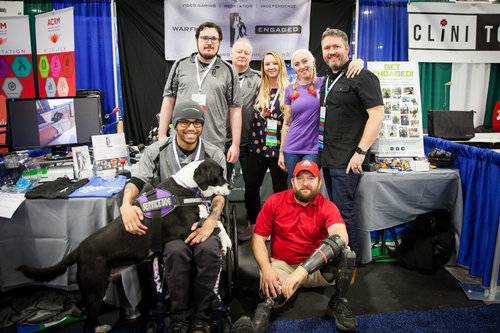
After meeting Tim, Ken bought a video game controller and took it apart. He figured out how to customize it for injured soldiers. His mission to help people like Tim led to founding the nonprofit Warfighter Engaged. Warfighter Engaged is a volunteer organization which customizes free devices that improve disabled soldiers' lives.

Devices such as the controller built for John Peck, a disabled Army Marine Sergeant. Sergeant Peck was missing his hands and feet, but he yearned to enjoy his PlayStation 3 again. Ken created a controller for Sergeant Peck, which he used until the day of his limb transplant. Then, Warfighter Engaged took off.

Warfighter Engaged entered a contest run by Microsoft. They called the contest a 'hackathon', a portmanteau of hacking and marathon. Microsoft would offer financial backing as an award for the best idea. Warfighter Engaged won with its universal controller. (Up until that point, there was no such thing as a one-size-fits-all controller because everyone’s injuries were different). The controller offered many ports, each one able to connect to different adaptive technologies.

Ken's involvement with Red Cross changed the way disabled gamers played. Warfighter Engaged and Red Cross are aligned in its missions to help members of the military and their families deal with the challenges of service. Now, because of Red Cross and its volunteers, disabled gamers are leveling up.

There are over one billion disabled people on Earth; or, a little less than the entire population of China. If you'd like to help Warfighter Engaged continue its mission, please click here. The American Red Cross provides global humanitarian efforts, and 90% of it comes from volunteers like Ken... and you. If you'd like to learn more about how you can help, please click here.

* * *

I dedicate this article to my best friend, Army Chaplain Captain Heather Borshof. Captain Borshof has devoted her life to serving soldiers like Tim. Thank you for your service.


Thursday, November 1, 2018

My Salute to Service Story: Tiffany Circle Honoree, Michelle Howard

By Rose Ellen O'Connor, Volunteer

It’s the largest fundraising event of the year for the American Red Cross in the National Capital Region. This Salute to Service Gala is attended by over 600 military, government, corporate and community leaders every year and the money raised is transformed into the services delivered every day in our community by the Red Cross. We hope you will join us for an inspirational evening on Saturday, November 10 at the Hilton McClean Tysons Corner.


Admiral Michelle Howard, who retired December 1st, will be feted as the distinguished woman warrior honoree by the local Tiffany Circle. The Tiffany Circle is a society of women leaders and philanthropists who donate $10,000 annually to the American Red Cross, and who each year nominate a deserving woman for this award. Each of the women follow in the footsteps of a long line of women leaders who have helped the Red Cross serve the American public in times of war and peace with disaster assistance, blood collection, safety training, support to the military and other community assistance services. The award is given to an active duty or retired service woman who best exemplifies the traits of leadership, strength and service.

Admiral Howard was the first woman to retire as a four-star admiral, the highest rank of that post. With the accomplishments of first African-American woman to command a Navy ship, leader of tsunami relief efforts, and vice chief of naval operations destined to become part of her resume, Admiral Howard never dreamed she’d become a four-star admiral when she was graduating from the U.S. Naval Academy in Annapolis in 1982. It had only opened to women in 1975.


“You have to consider the context of the times,” she says, noting that she was at the academy from 1972 to 1978, and the first woman one-star admiral was commissioned in 1972. By 1978, there were two more. “I don’t think any woman would have had a dream or an expectation that she would go beyond the rank of two-star because it hadn’t happened yet,” she says.

Just five years after graduating from the academy, in May 1987 while serving aboard the USS Lexington, she received the Navy/Navy League Captain Winifred Collins award. It is given once a year to a woman officer for outstanding leadership.

Admiral Howard became the first African-American woman to command a ship in the Navy on March 12, 1999, when she took command of the USS Rushmore. It was just one year after she had graduated from the Army’s Command and General Staff College with a master’s in military arts and sciences.

“I would say the biggest thing was that when I took command I got a lot more media than my mail counterparts because of the significance of the event,” she says. “There were many different reporters who were there to witness it and who wanted to interview me.”

She was the commander of Amphibious Squadron 7 from May 2004 to September 2005. Her ship was headed to the Middle East when it was rerouted to Indonesia for tsunami relief efforts
“It was almost overwhelming,” she says. “The debris that consisted of what was left of life: human beings, pets, buildings, furniture, toys piled up to the second-story level of many buildings that looked like they’d been bombed out. The survivors of all that were in these huge camps and the most immediate need was getting them food and clean water. So, working with the Indonesian army, we just organized ourselves and started pushing as much relief support as we could. We just worked around the clock.”

Her shore assignments included senior military assistant to the Navy Secretary, deputy chief of naval operations for operations, plans and strategy, and the 38th vice chief of naval operations.
Admiral Howard first became interested in the military when she watched a documentary on service academies as a young girl. Luckily, the academy opened up to women when she was a teenager and she zeroed in on the Naval Academy. She says she’s honored to be celebrated by a component of the American Red Cross, which does so much for the military.

“Well, it was certainly unexpected,” she says. “The Red Cross has always been a tremendous supporter of the Armed Forces. For the Navy, they’re just fantastic to provide emergency communications for our sailors. When there’s something going on in the family, they make sure that word gets through to the sailor. And so, at this point in my life, to be recognized by them is quite an honor.”

Others who will be honored at the Salute to Service include:

  • Lifetime of Service Award: David Rubenstein, Co-Founder and Co-Executive Chairman, The Carlyle Group
  • Corporate Hero Award: Amazon, accepted by Teresa Carlson, Vice President, Worldwide Public Sector, Amazon Web Services
  • Community Partner Award: AvalonBay Communities, Inc., accepted by Sean Breslin, Chief Operating Officer, AvalonBay Communities, Inc.

For more information on the Salute to Service and for tickets, visit www.redcross.org/dcgala. 

Thank you to our sponsors:
Presenting Sponsors: Amazon Web Services and AvalonBay Communities, Inc.

Lifetime of Service Award Sponsor: GTT Communications, Inc.

Tiffany Circle Distinguished Woman Warrior Award Sponsor: Cassaday & Company, Inc.

Platinum Sponsors: Emergent BioSolutions, Holland & Knight LLP, OptumServe, Pepco - An Exelon Company

Valet Sponsor: Pyramid Systems, Inc.

Heroes Sponsors: Ernst & Young, Hilton Worldwide, The J. Willard & Alice S. Marriott Foundation; STG International, Inc.

Monday, May 21, 2018

National Military Appreciation Month: Deployment Services

Written by: Carly Flumer, Volunteer


As May is National Military Appreciation Month, we will focus a series of blogs on our Red Cross Service to the Armed Forces program.

Imagine being away from your family for months, or even years, only to come back and not recognize anything. You feel lost in a place which was all too familiar not long ago. What kinds of thoughts would be running through your mind? What kinds of feelings would you want to express? The American Red Cross recognizes that coming home from deployment is one of the most difficult transitions one can make, and we look to make it easier by providing Reconnection Workshops to military members and their families.


These workshops are not only free and confidential, but they build and enhance lasting, positive relationships with those in the community. We realize that some may be scared to share their experiences, while others may be more outspoken; therefore, discussions can be held one-on-one or in groups, depending on preference. All members of every branch of the Armed Forces are welcome to participate, including those in the Reserve, National Guard, active duty members, veterans, and their families.

Adults may choose from five different topics, including:
  • Enhancing skills to develop clear communication
  • Recognizing and discussing stress, trauma, and other war-related concerns
  • Managing signs and symptoms of depression and learning when to seek help
  • Reconnecting with children by exploring family dynamics and deployment issues
  •  Exploring anger and other intense emotions in different situations

Children and teens may choose from two different topics, including:
  • The Roger That! Communication workshop, which focuses on developing and refining listening and communication skills
  • The Operation 10-4: Confident Coping workshop, which focuses on recognizing and enhancing strengths to help manage distressing situations

Monday, May 14, 2018

National Military Appreciation Month: Hero Care Network

Written by: Carly Flumer, Volunteer

As May is National Military Appreciation Month, we will focus a series of blogs on our Red Cross Service to the Armed Forces program.


May is Military Appreciation Month and the Red Cross supports our troops through a uniquely-developed tool called the Hero Care Network. We recognize that there may be times when emergencies occur. Using this free tool, military families are able to reach out to their loved ones 24/7, providing them extensive access to any location. Every day, more than 300 military families request assistance through the Hero Care Network by either using our online self-service tool via computer, tablet, or cell phone, or by calling a Communication Specialist. 

In order to be eligible for assistance, one must be:

  • An active duty member of the Army, Marines, Navy, Air Force, Coast Guard
  • An active member of the Guard and Reserve of all military branches
  • A civilian employed by or under contract to the Dept. of Defense and stationed outside the continental United States
  • A cadet or midshipman at a service academy; ROTC cadet on orders for training
  • A Merchant Marine aboard a U.S. Naval Ship

You can initiate a request for Red Cross emergency assistance for members of the military currently serving on active duty by using the online self-service tool. Using a computer, smart phone or tablet, you can start a request for services and track its progress from anywhere in the world.

Please make sure to have the following available when making your request:
  • Full legal name
  • Rank/Rating
  • Branch of Service
  • Social Security Number or Date of Birth
  • Military Unit Address
  • For deployed service members: information about the deployed unit and home base unit
  • Name and contact of the immediate family member experiencing the emergency
  • Nature of the emergency
  • Where the emergency can be confirmed, such as a hospital, funeral home, etc.

To request assistance online, visit: http://www.redcross.org/get-help/military-families/emergency-communication, download the free Hero Care App, or text "GETHEROCARE" to 90999.

To request assistance via phone, call: 1-877-272-7337.


Wednesday, May 9, 2018

National Military Appreciation Month: Red Cross Reconnection Workshops


Written by: Kristen Shaw, Volunteer

As May is National Military Appreciation Month, we will focus a series of blogs on our Red Cross Service to the Armed Forces program.

“No duty is more urgent than that of returning thanks,” said author James Allen.


This could not be truer of helping our United States service members and their families returning to everyday life after a deployment or their military service has come to an end. No two deployments are alike; time lengths vary, new experiences have been had, and loved ones both home and away have had to miss out on important events or milestones. Often upon returning or re-integrating into society, military men and women struggle with feeling isolated and unable to communicate what they experienced while deployed.

The Red Cross recognizes the notable sacrifices made by our nation’s Military and their loved ones, and so the need for accessible and readily available resources to aid those trying to readjust to their old lives. To aid the needs of all those impacted by a military deployment or service, ‘Reconnection Workshops’ are offered by the Red Cross to ease the process of transitioning back into civilian life – including all branches of the Armed Forces, Reserve, National Guard, active duty service members, veterans and their families. Spouses, parents, children, siblings, significant others, and close friends are also welcome to attend. These free sessions are confidential, small groups of at least three individuals, led by mental health professionals and focusing on positive reconnections, tools, strengths, and coping strategies for reengaging in civilian life.

Sometimes physical or emotional hardships in the form of Traumatic Brain Injuries (TBI), Post-Traumatic Stress (PTS), and depression can present new or more difficult challenges. The Red Cross knows this, too, and attempts to craft some of their modules around the sensitivities that may arise from those specific problems.


‘Reconnection Workshops’ are one of seven programs underneath the Red Cross’ Service to the Armed Forces (SAF) Program and can be dated all the way back to May of 1881, when Clara Barton established the American Branch of the Red Cross.

Another program offered is ‘Mind-Body Workshops’, focused on improving wellness and managing stress using the mind, body and spirit. Through the workshops, the Red Cross teaches easy-to-use skills that connect the body with the mind to help participants cope with stress and trauma.

Children especially can be strongly affected by the stresses and adjustments that accompany a family member’s deployment, and two newer workshops called ‘Roger That! Communication Counts’, and ‘Operation 10-4 Confident Coping’ have also been created to focus on learning the effective ways of problem solving and communication for both younger and older children in the unique situations they face post-deployment.

Clara Barton, who nursed soldiers on the battlefield, stated that “If I can’t be a soldier, I’ll help soldiers.” And that is what these workshops aim to do.

If you or a family member are interested in finding a participating workshop location in the National Capital Region, or in registering, you can find more information here: http://www.redcross.org/get-help/military-families/deployment-services

Thursday, April 26, 2018

Our Red Cross Volunteer Story: Clown Judy and Clown Gary

Written by: Rose Ellen O’Connor, volunteer


Judy Gleklen Kopff stood outside the Fisher House at Walter Reed Army Medical Center on Christmas Eve 2004 and cried. She and her husband, Gary, were scheduled to entertain wounded warriors and their children in the Fisher House dining room. She’d been volunteering as a clown since 1996, but this was her first experience entertaining the wounded, and she was scared. She didn’t know how she’d deal with double and triple amputees.

She rang the doorbell, and as soon as she and Gary entered, a three-year-old boy jumped off his father’s lap and ran to her, crying, “Daddy! Daddy! It’s a clown!” He latched onto her leg and wouldn’t let go.

“I dried my tears as unobtrusively as possible and started making balloon animals for children who were creating an ever-expanding line leading to my husband and me,” Judy recalls. “At that moment, their parents were not patients missing arms or legs or eyes. They were parents enjoying the smiles and squeals of laughter of their children on Christmas Eve. We call ourselves Giggle Therapists.”

“Clown Judy,” now 71, and “Clown Gary,” now 72, learned in December 2004 about the Red Cross program at Walter Reed, underwent training and have been Red Cross volunteers ever since. They entertained at the Walter Reed Army Medical Center in Washington, DC until it closed in 2011 and then switched to Walter Reed National Military Medical Center in Bethesda, MD.

Judy spent her Federal government career as a civilian working at the Pentagon in the Office of the Secretary of Defense.  After taking an early retirement at the age of 49 in 1996, she went back to work for the Secretary in 2003 to work on issues related to Iraq and Afghanistan.  Her final position as a chief of staff in an office dealing with battlefield contractors ended in 2008. Her intense, high profile jobs didn’t dampen her love of lightheartedness. It was at an office Christmas party in 2004 that she made her connection to Fisher House. Standing next to Defense Secretary Donald Rumsfeld’s wife, Judy mentioned that she volunteered as a clown but didn’t have any place to entertain on Christmas. Mrs. Rumsfeld gave Judy the name of the person in charge at Walter Reed’s Fisher House.

These days Judy and Gary find themselves comfortable in any setting with wounded warriors and their families. For example, they’ve entertained at the Military Advanced Training Center (MATC), where the severely wounded go for intense physical and occupational therapy. At their first visit, they cautiously approached the head nurse and asked if they could enter MATC and interact with wounded warriors. The clowns received a thumbs up and entered accompanied by the head nurse’s service dog, who seemed to be saying, “These clowns are OK to be with you.”

The head nurse explained that this was the toughest physical therapy for young warriors now fitted with new arms and/or new legs and working hard for many hours at a time.  Clown Judy and Clown Gary were invited to distract the patients as they entered in full clown regalia, while carefully watched by MATC staff and the head service dog.

About four years ago, they were again at MATC and saw two patients – both double amputees -- lying on their stomachs on cots next to one another and working with physical therapists. Clown Gary thought one was asleep, so he started to show the other one a card trick. The patient they thought had been asleep turned and said, “Hey, I know that trick.” Gary then handed him the deck of magic cards and was relieved and pleased to have the young USMC corporal take over the magic demonstration for his band of brothers.

“We just watched,” Judy says. “We all were having fun, and the head nurse’s goal was met because our antics distracted the severely wounded patients for a few minutes from yet another long day learning how to walk on new prosthetic legs or how to prepare to hold their young children with new prosthetic arms.”

Gary walks the Walter Reed corridors “locked and loaded” with his multicolored squirt gun, which cannot fool the wounded warriors who know all too well the appearance of real guns.  He invites mayhem as he offers the use of his squirt gun to some patients.  As a highly decorated USMC General was walking amidst injured Marines who were perhaps one-third his age, Clown Gary mischievously whispered, “Anyone want to squirt the General?” One young double amputee seized the opportunity. 

“As the squirt gun did its worst, both men, as well as nearby staff and other patients, all broke into loud laughter,” Judy recalls.

Gary says, “When I get such laughter, it makes me feel that my mission is being accomplished. We don’t get paid in coin. We get paid in laughs.”

Sometimes the laughter and smiles are mixed with tears. One summer Judy and Gary were at a barbeque for wounded warriors and their families. Gary was pumping up a balloon to shape into a dog for a young man in a wheelchair; he wanted the balloon dog for his young son. It was a hot day, and the balloon accidentally popped. The sound instantly took the young combat veteran back to his memory of being severely wounded by an IED in Afghanistan. The patient started to cry, as did Clown Gary. Impulsively, both men hugged each other.

“Don’t worry,” the patient said to Gary. “We need to keep going so I not only have a toy balloon for my son, but I can also move a step closer to learning how NOT to react to loud noises now that I’m stateside.”

Judy and Gary understand smiling through tears. In the mid-1980s, they tried to conceive five times through in vitro fertilization. Judy also underwent four major surgeries to open her fallopian tubes, and then they turned to a surrogate mother. She turned out to be a fraud.

“At that point, I decided no more. We’re not going to try any more to have a baby. My experience of not being able to have children was one of the most difficult, most painful experiences of my life,” Judy says.

Once the decision to stop trying to have children was made, Judy stepped up her volunteering, whereas Gary turned to serving on the Board of Outward Bound, where he first learned to mountain climb in his home state of Colorado.  His climbing took him to all seven continents as he climbed some of their highest mountains, including the Vinson Massif in the Antarctic in 1991 and Everest in 1992.

In 1996, Judy discovered clowning. She’s made balloon creations and performed silly magic tricks for orphans and polio patients in Vietnam, local pediatric cancer patients, DC firefighters and police, elementary school children, and teenaged Maasai warriors in Kenya. She’s also entertained nursing home residents, foster families, kids in homeless shelters, Johns Hopkins Medical School students, the Chairman and Vice Chairman of the Joint Chiefs of Staff, and at the Million Mom March. Gary has accompanied her since his first venture to Walter Reed on Christmas Eve 2004.
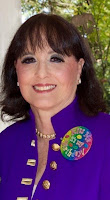
“The joy in my heart when I see smiles on the faces of the people I entertain confirms that all my efforts are worthwhile,” Judy wrote for her upcoming Cornell University 50th reunion book.

It’s not always joyful. Sometimes patients just want to talk, and Judy and Gary listen. “Some of their stories are overwhelming, and I sit and listen and cry,” Judy says.

Every so often their clowning can have big consequences. In December, Judy volunteered as a clown at an Easter Seals dinner reception, and a woman came up to her and told her that she had met her husband almost three years ago because of Judy. Clown Judy had made a balloon flower for the woman’s husband-to-be at the 2015 DOD Warrior Games in Quantico, VA (competitions for wounded, ill, and injured service members and veterans). He had used the flower to introduce himself to the woman, and now they’re married and have a baby.

“That made me cry,” Judy said, “but they were happy tears.”

It takes Judy three hours to transform herself into a clown. First, it takes her 45 minutes to an hour to make a three-foot tall hat out of balloons. Then she paints a big heart on each cheek, outlining in black eyeliner and coloring in with red lipstick. She attaches purple, gold, pink and black false eyelashes for the upper lashes and draws 10 long, black eyelashes out of eyeliner underneath each eye. She puts on her costume of polka dot bloomers, a red petticoat, a blouse emblazoned with clown decals, a puffy skirt with USMC stripes on the sides and a satin vest embroidered with “CLOWN JUDY” on the back.  Finally, she places a red foam ball on her nose and puts on a red wig.

Judy grew up a twin, the fourth of five children to Leo and Honey Gleklen. She was born a triplet, but one sister died when she was just a few months old. The family lived in Providence, RI, and Judy describes them as “silly, happy and openly affectionate, where kisses and laughter were the highlights of our daily lives.” The five children were always encouraged to help less fortunate people and to make them smile, she says, planting the seed for her becoming a clown many years later. They were encouraged to do volunteer work, and she started at age 6, performing ballet recitals and singing with her twin sister at nursing homes. She was also a Red Cross Candy Striper in high school and did a variety of volunteer work as an undergraduate at Cornell University.  Judy’s mom was always active in non-profit organizations, and she and her siblings continue that tradition.

Gary retired several years ago from his work as a financial strategy consultant and expert witness in lawsuits helping unravel the mess made by some of the largest banks in the US and Europe.  He grew up in Denver with an older sister. His mom was a devoted Red Cross volunteer, called a Gray Lady. His parents, Joseph and Claire Kopff, stressed academics, and Gary went east to Yale College.  After graduation, he studied at Cornell’s Graduate School of Management, where he met Judy.  They married in Providence in 1969, after Judy finished graduate studies in art history in New York City.
Today, Judy and Gary find fulfillment in the volunteer work they do.

“It makes me feel good when I bring smiles to the faces of children and ‘children-at-heart,’ as I call the adults,” Judy says. “Most adults like to smile and like to feel good. And If I can make them and their families feel good for a few minutes so that they can forget their pain, then that’s a good thing.”
Thursday, April 12, 2018

A Flag from History

Written by: Joe J

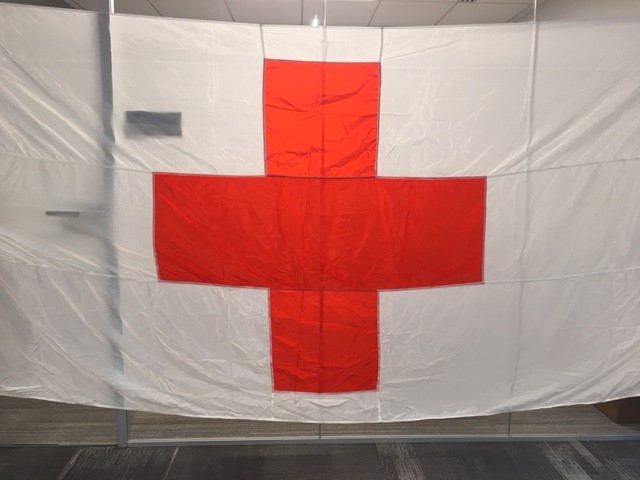
I recently donated a flag displaying the Red Cross to the American Red Cross in the National Capital Region at their headquarters in Fairfax, VA. I’m a retired senior medical physician’s assistant now living in Virginia following retirement after having served 31 years with the Canadian Forces Medical Services. My American-born wife, Maya, and I came across the flag while preparing to downsize our home. This particular flag was a backup flag for a military medical facility in Daruvar, Croatia, during the breakup of Yugoslavia in the early 1990's. It was given to me by some of my soldiers on redeployment to Canada. The Red Cross symbol is used by the military of many nations to identify medical personnel and facilities protected under the rules of the Geneva Conventions. 

Canada was one of several countries participating in a United Nations Peace Keeping Force (UNPROFOR). Canada’s participation was known as Operation Harmony.

I went to Daruvar in 1992 to augment the staff, as the senior noncommissioned officer, of a Battalion Medical Station already deployed to Daruvar. Most of the troops at that time were in Sarajevo and the city was under constant sniper fire and frequent shelling and mortar fire. Part of my job was to establish a semi-permanent medical clinic in Daruvar in preparation for the medical resources redeploying from Sarajevo. Although quieter than Sarajevo, Daruvar was in the conflict zone where the occasional gunshot or explosion was heard. The medical station was established in part of an orphanage/school where many children were homeless and without family as a result of fighting in Croatia.  

Many of the troops, including the medical personnel, returning from Sarajevo had witnessed the gruesomeness of war as played out during the Siege of Sarajevo, particularly along one of the main roads that became known as “Sniper Alley” because of the indiscriminate sniping, from hills surrounding the city, at civilians going about their chores and trying to survive in their war-torn city.  

In one particular instance, the medical personnel and other soldiers participated in the rescue and initial treatment of up to 10 children, aged seven to 10, killed or severely injured as a result of a mortar round landing in their midst. The children frequently visited the building where the Canadian contingent was established. The troops on the lower level would often pass them food, usually candy, and the children would scurry off to a particular area to enjoy their treats. Unfortunately, and perhaps deliberately, a mortar round fell among them.   

Needless to say, some of the medical staff and other soldiers were psychologically traumatized by what they witnessed and experienced. It often manifested itself in bouts of depression, nightmares, not eating or difficulty carrying out daily tasks.  In one instance, I found a soldier sitting alone on a stone wall of a of a destroyed house. I watched him for a while, as the soldier smoked cigarette after cigarette. I went over to him, sat beside him for a while before asking him, “How are you doing?” The soldier immediately burst into tears and after much sobbing related what he saw and his participation in the rescue of the children. He was one of the soldiers who that day had given the children candy. Post-deployment psychological counseling was provided to all who had such experiences.

I was very appreciative of the professionalism and bravery of the medical personnel that staffed the Battalion Medical Station during my time in Daruvar, and I will always be grateful that I was a part of that team. To be given the flag was an honor and to have it accepted by the Red Cross means that perhaps once again it will be used to symbolize a place of aid and comfort and sanctuary.  

Thursday, March 15, 2018

Our Walter Reed Volunteer Story: Karel, Therese & Carol

Written by: Rose Ellen O’Connor, volunteer


Karel Fick’s son, an Air Force Captain, was stationed overseas, moving in and out of Afghanistan in 2005, and she was endlessly worried about him. She was used to the military – her father was a Navy Lieutenant who talked about his service in World War II and her husband served as an Army Lieutenant in Vietnam – but that didn’t help because this was her son. “It’s a mother’s job to worry,” she says. Karel was relieved and grateful when he came home safely and decided she wanted to help other military moms. So she turned to the Red Cross and started volunteering at Walter Reed National Military Medical Center in Bethesda, MD.

Therese Shell, Karel’s neighbor, heard her stories and decided she wanted to volunteer too. It was a good fit, she says, because her husband is a retired Navy Commander and her son is a Navy Lieutenant Commander.

Carol DeLeon wanted a change after 18 years as a volunteer in the White House correspondence department. A retired nurse, she wanted something in the health field and settled on Walter Reed.

Now all three women come together every Tuesday to try to make life a little more pleasant for the families of patients at Walter Reed. Their duties range from passing out basic needs items, such as clothing and toiletries, to asking hospital personnel for an update on a patient’s condition, to sitting and listening to a family member talk. They also hand out toiletries, give directions to local resources and explain how to get on the metro. If a family is in crisis, they’ll set up a room with snacks and water for them.

“Our goal is just to be soothing in a really stressful time,” says Karel. “We walk around the waiting room looking for families that might need a moral support. Usually, we let them talk and we tell them their patient is in the best place they could possibly be, you know, Walter Reed, and let them know we’re there if they need anything.”

Karel is the team leader for the Surgical Waiting Room and handles scheduling for all the volunteers. She works in the Intensive Care Unit (ICU). Carol, her co-team leader, helps with scheduling and works in the ICU, as well. Therese volunteers in the Surgical Waiting Room and brings in coffee and donuts every Tuesday. She also fills in for Karel or Carol if they can’t be in the ICU. “The coffee and donuts are a big hit,” Therese says. “I get that set up and everybody’s so happy to see it,” she says.

The volunteers can have a profound effect on a family. Last month, a retired Navy Commander was vacationing with his family in the Caribbean and had to be rushed to Walter Reed for emergency surgery. His wife and two adult sons followed him in. Karel was off and Therese was filling in for her. Carol and Therese brought sweat pants and sweat shirts for the family, along with toiletries. It was a no-brainer, they said.

“Coming from the Caribbean to this area in February was quite a shock,” Carol says. “We were making them a little more comfortable. They felt more secure that we were helping them.”

When the retired Navy Commander and his family left, they offered grateful praise for the volunteers specifically highlighting the ways in which they went out of their way to support their family, Marin Reynes, the Walter Reed volunteer supervisor says.

“Their feedback was solely focused on the Red Cross volunteers and the impact they had on their stay,” Marin says. “Karel, Carol and Therese may downplay their service, but they change lives every Tuesday.”

Sometimes things that seem so small can mean so much to the patients and family. The hospital is always dry, and patients and their family members are constantly looking for chap stick. Karel, Carol and Therese keep a ready supply.

“Somebody once said to me, you know handing out a chap stick or a comb or whatever is no big deal to you,” Karel says, “but to us it can make or break our day.”

Sometimes, the volunteers find themselves supporting family members in unusual and simple ways. A woman had been at her husband’s side for four days and hadn’t had a shower. Karel and Carol came to the rescue.

“We brought her some shampoo and conditioner and nice-smelling soap and then we found a social worker who found her a place to go take a bath,” Karel recalls. “And, boy, she felt fabulous.”

Volunteering can bring them to moments they treasure but never would have expected. Once the Pediatric ICU was looking for volunteers to hold a baby that had been removed from his home. He was very under-developed and needed to be held to learn how to form a bond. Karel and Carol were intrigued. They put on hospital gowns and masks and held the baby.

“He was very responsive,” Karel says. “It made us feel good. I mean we might have helped him make some pathways in his brain. He was too insecure to actually smile but he was getting there. The good news is he went home with his family and hopefully lives happily ever after.”

The volunteers constantly look for ways to connect with family members. A wounded soldier came into the hospital and was nonresponsive. His mother was with him all the time. So Karel and Carol started visiting her. Karel asked where she was from and the mom said Riverside, CA. Karel had lived in Orange County, CA. “We made a connection there and we would talk about California. That gave her comfort – something she could relate to.”

The son eventually came around and was discharged.

“By the time he left here, he was awake. He would look at us and smile,” Karel says. “So that was another happy ending.”

Therese tries to make connections with family members in the Surgical Waiting Room. They’re often agitated and the hours drag on as they wait for word of their loved one. She calls and gets updates for them and then just sits with them and tries to calm them. She tells them that scheduled surgeries sometimes get bumped by emergencies and that could explain the wait.

“We just like to feel that we’re soothing and taking some of the intrigue and worry away,” Therese says.

Karel and Carol take a similar approach in the ICU waiting room. A soldier was medevacked from Afghanistan to Walter Reed and his mother was waiting for him. She was distraught and they just sat with her and listened.

“Some people just need to talk, so we sat with her for quite a while,” Karel recalls. “And when we were getting up to leave she hugged us both and said thank you so much. That really touched me.”

Karel lives with her husband Robert and her cat Chessie in Gaithersburg, MD. She has two sons, Scott and Alex, and one grandchildren.

Carol lives with her husband, Leonardo, in Silver Spring, MD. She has four sons, Leo, Michael, Paul and Matthew, and five grandchildren.

Therese lives with her husband Mark in Gaithersburg, MD. She has two sons and a daughter, Jason, Justin and Christie, and three grandchildren with a fourth on the way.