- Impartiality – It makes no discrimination as to nationality, race, religious beliefs, class or political opinions. It endeavors to relieve the suffering of individuals, being guided solely by their needs, and to give priority to the most urgent cases of distress.
- Universality – The Red Cross is a worldwide institution in which all societies have equal status and share equal responsibilities and duties in helping each other.
Monday, May 17, 2021
I Am Asian and An American Red Cross Volunteer
Wednesday, December 16, 2020
My Red Cross Story: Sherry Hwang
Written by: Stephanie Babyak, Communications Volunteer
Sherry Hwang lives by an old Chinese proverb that goes, “When you are successful, also extend your hand to raise up another with you.”
![]() |
| Sherry Hawng, President and Co-Founder, Pyramid Systems, Inc. (photo courtesy of Pyamrid Systems) |
As President and co-founder of technology leader Pyramid Systems, Inc., Sherry has achieved industry recognition and numerous awards for excellence. Most recently, The Washington Post selected Pyramid as a Top 2020 Workplace. Sherry herself is a winner of the 2020 Small Business and Entrepreneur Leadership Award. And the list goes on.
Yet, Sherry attributes her success in large part to a commitment to giving back to the community and helping others.
“People are the most important part of my company’s success,” she insists. “By helping our communities, we show we care about each other. Understanding different viewpoints and cultural collaboration makes us more successful.”
In 1995, Sherry and her husband Jeff, CEO, founded Pyramid Systems Inc., located in Fairfax, Virginia, near the National Capital Area & Greater Chesapeake Region (NC&GCR) headquarters.Giving back is a key aspect of Pyramid’s mission, and that’s where the relationship with the American Red Cross starts.
_________________________________________________________________________
Sherry’s example of service to others is demonstrated in her many years as a Board Member, Tiffany Circle member, and long-time supporter of the Red Cross mission. Sherry first became involved with the former National Capital Region in 2010 as a Board Member. At a Red Cross Disaster Summit not long ago, Linda Mathes, former CEO of the American Red Cross in the National Capital Region (now the NC&GCR), took Sherry on a tour of an on-site Emergency Response Vehicle (ERV). The existing ERV fleet, she was told, was over 20 years old. Many of those vehicles were routinely experiencing mechanical issues due to their age.
![]() |
| Sherry with her husband Jeff, the day the new ERV arrived, ready for service! |
After hearing this, Sherry decided that the donation of an ERV would be something Pyramid employees could be proud of.
_______________________________________________________________________
________________________________________________________________________
“When someone is undergoing a serious and traumatic life event – whether it’s a fire, flood, or something else – they need assistance fast, and this ERV can help," said Sherry.
![]() |
| Sherry and Jeff cutting the ribbon at a small ERV dedication ceremony this Fall, with former CEO Linda Mathes. |
_____________________________________________________________________
![]() |
| Sherry pictured here (front center) with some of her fellow Tiffany Circle members at the National Capital Region 2017 Annual Meeting. |
![]() |
| Sherry is pictured here at one of our Red Cross smoke alarm install events, along with fellow installers and Red Cross Regional Philanthropy Officer, Art Shaw (far left). |
- - - - - - - - - - - - - - - - - - - - - - - - - - - - - - - - - - - - - - - - - - - - - - - - - -
Monday, August 24, 2020
Red Cross Holds Virtual Resiliency Workshops for Military Members and Families
By Laura Cantagallo, American Red Cross Volunteer
A substantial part of the Red Cross mission is its service to the armed forces and all who affiliate with them, such as spouses, families, and loved ones. It can be difficult when a family member is deployed overseas, leaving his or her significant others back at home fighting their own battles.
As a way to support these military families and affiliated members, the Red Cross is holding virtual resiliency and stress management workshops via Zoom. I sat it on the one from Friday, July 24, which was led by Dr. Carol Deel, a licensed mental health provider with her own full-time private practice in Maryland, and Lynn Hottle, a Service to the Armed Forces (SAF) reconnection facilitator and part of the regional Disaster Mental Health team.
“We are very serious about our commitment to serving the armed forces; this is how Clara Barton started it,” said Hottle.
Hottle and Deel met with a small group of military members over Zoom to discuss their personal experiences with stress and anxiety and how they cope, converse about how stress can impact us, and, throughout the second half of the workshop, give participants techniques to help dissolve stress at its root.
"We just really want to share with you all some tools and information for some of the things going on in today’s world,” said Hottle.
The facilitators began with an open discussion about stress and how it reaches each individual on a personal and unique level. Hottle and Deel educated participants on how stress can impact us on many levels.
This includes:
- Bodily – heavy breathing, increased heart rate, stomach pain
- Behaviorally – argumentative, increased/decreased appetite, difficulty sleeping
- Emotionally – anger, sadness, mood swings
Later on, participants were given a list of ways to cope, reduce, and manage the stressors they experience, like cooking, organizing, reading a book, listening to music, and much more – the list of stress-reducers went on in abundance.
Deel and Hottle later switched the focus over to relaxation and stress-reducing techniques. The first was deep breathing: force out as much air as possible and then breathe back in deeply.
“Breathe at a rate that’s comfortable for you,” said Deel as she walked participants through the technique.
Another similar breathing exercise was a hand tracing technique that synchronized tracing the outline of your hand as you breathe in and out.
A third method for reducing stress included using senses to help bring about calmness. This means observing things around you using the five senses – this can help individuals stay grounded and notice their surroundings when trying to fall asleep or self-soothe. Throughout these exercises and tips, Deel and Hottle invited participants to discuss how the exercises changed their stress levels.

As the workshop came to a close, the meeting leaders continued to talk about stress, how it impacts us, and how we can cope with it in positive and healthy ways, as well as helpful sleeping tips to ensure a good night’s rest. This workshop is especially crucial due to the uncertainty and anxiousness that can be brought about with the effects of COVID-19. Facilitators ended the meeting with a self-reflection from each individual, and also a “power of gratitude” activity: participants were asked to share three good things they experienced that day and one thing each of them were looking forward to for the following day.
Now, more than ever, we must show compassion and understanding to those we care about. None of us sincerely know what the future holds, but with help and support offered by the Red Cross, we can make try to bring some sense of normalcy during these challenging times.
“There are so many things that we cannot do or are restricted to, and lots of losses in our lives,” Hottle adds, “Try to reframe the negative things that are happening in our lives and put a positive spin on it.”
If you or a loved one is suffering and needs assistance, you can call the crisis hotline at 1-800-273-8255, which is available 24 hours a day, in both English and Spanish languages.
- - - - - - - - - - - - - - - - - - - - - - - - - - - - - - - - - - - - - - - - - - - - - - - - - - - - - - - - - - - - - - - -
To learn more and sign up for the SAF Virtual COVID
Stress-Management Workshops, click here: https://www.redcross.org/local/dc-va-md-de/about-us/our-work/virtual-covid-stress-management-workshops.html (More dates to be added soon!)
To learn more about Disaster Mental Health volunteer opportunities, visit https://www.redcross.org/volunteer/volunteer-opportunities/disaster-health-mental-health-volunteer.html
Wednesday, January 15, 2020
My Red Cross Volunteer Story: Shirley Gaines
![]() |
| Shirley Gaines has personal experience with two lines of service at the American Red Cross. |
Click here to learn more about our Service to Armed Forces services.
Click here to learn more about donating blood with the American Red Cross near you.
Friday, October 4, 2019
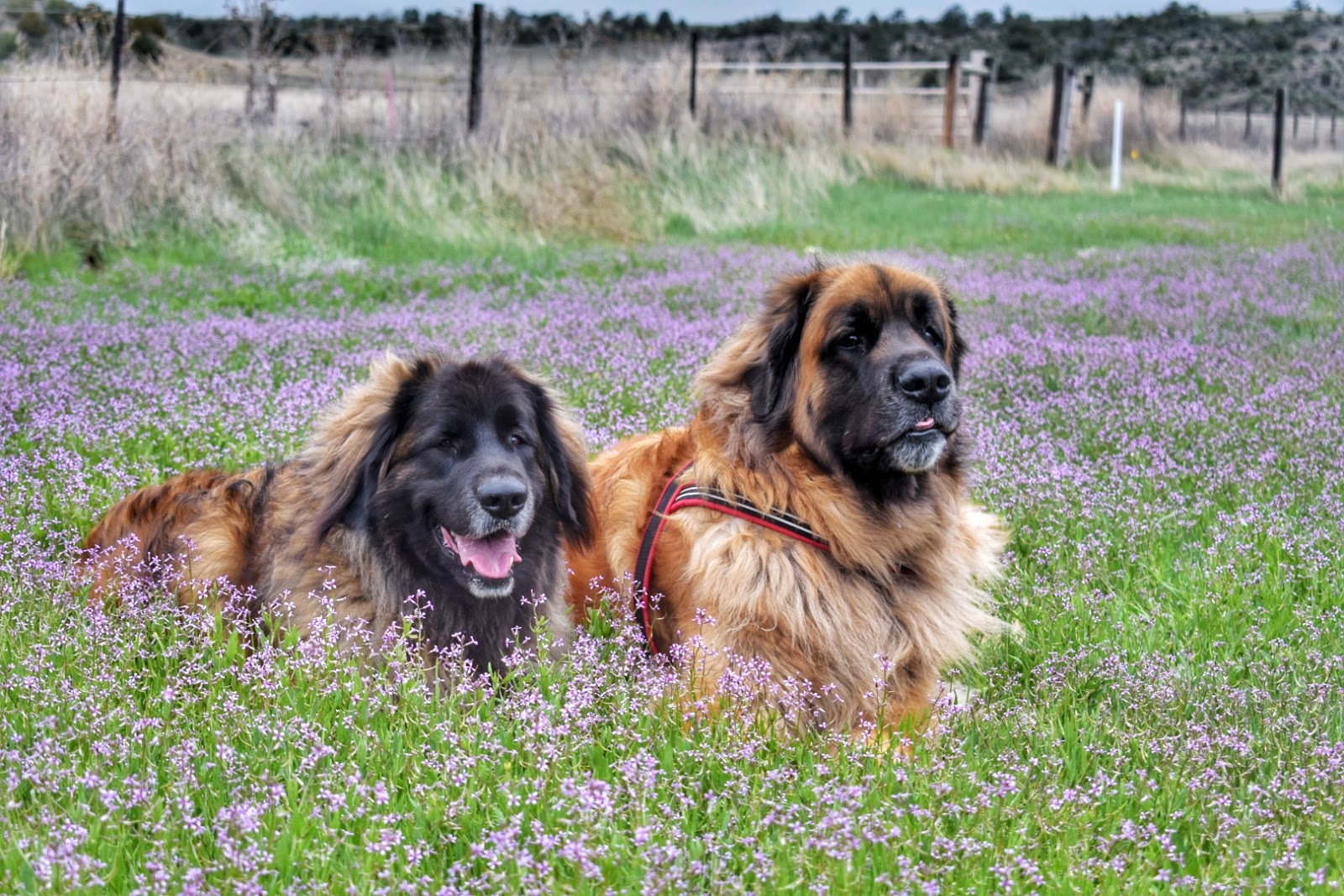
Aslan and Digory: Two of our Furriest Volunteers
![]() |
| Jen O’Keefe, featured here in a Red Cross vest, and Aslan receiving their award at Walter Reed. Digory is not in attendance. |
![]() |
| The two brothers out and about on a volunteer assignment. |
Both dogs had to go through an extensive process to qualify as Red Cross therapy dogs. After almost a year as volunteers in various locations, they needed to pass Good Citizen Tests, which are certified by the American Kennel Club. Then they each had to go through a Red Cross screening before being approved to serve at Red Cross sites. Aslan earned his Red Cross certification in 2014, while Digory earned his in 2018.
![]() |
| Jen and Aslan resting after volunteering. |
Wherever they go, the dogs turn heads. Initially, people can’t help but notice them for their size. Before long, though, it’s their happy, calming energy that draws people to interact with them. Jen explains:
get as much out of the experience as the people that we visit.”
Thursday, December 6, 2018
My Red Cross Story: Rainier Gordon
It seemed like a bad dream. Rainier Gordon was having the worst day of his life. Something was off kilter. As a Red Cross volunteer, he’s used to putting together kits and other items to help the victims of all kinds of tragedies at the organization’s logistics center in Gaithersburg, Maryland. He also goes to emergency shelters to comfort the victims of house fires.
Now he was the one receiving help.
On a quiet October morning, his house on Mary Catherine Drive in Clinton, Maryland, erupted in flames. His wife sent him an email telling him the bad news and he called her back.
“She said come quickly,” Rainier recalls. “The house is on fire.”
He lives in the house with wife, father-in-law and brother-in-law.
Fortunately, no one was home and no one was injured when the fire broke out in the concrete, 6,000-square-foot, eight-bedroom house. It apparently started in the walls behind the stove, microwave and refrigerator. There was a power outage before he left for work, and Rainier believes when the power came back on mid-morning, it caused a surge of electricity, which triggered the fire.
Flames swept through the kitchen, dining room and living room, destroying the roof and gutting two bedrooms. The other bedrooms received smoke and water damage.
When Rainier got to his home, he wasn’t allowed to go in and was frantic to see how much damage had been done. He held it together, he said, to be strong for the rest of the family.
“It was a lot to take in. At first, I was relieved because my wife had told me the house was gone. I wasn’t expecting to see anything when I got there.” Rainier says. “But then I was anxious to find out what the damage was. You’re in a state of just trying to figure out what’s on the other side of the walls."
“But then you’ve got to take control and make sure your family feels secure,” Rainier says. “They can look to you for strength.”

Standing outside the house, he worried that they would lose priceless photographs and mementos that filled their house. While serving oversees in the Army, Rainier acted as the U.S. delegate to NATO for 10 years and also as the U.S. representative to ABCANZ (the American, British, Canadian, Australian, New Zealand Armies Program). He traveled extensively and says he was in a different part of the world every six months, and collected potteries, rugs, furniture and other treasures. (He’s now retired and works as a civilian at the Pentagon.)
When he got in the house, he discovered he’d lost a few photos but that many of the other keepsakes could be restored. He wasn’t upset about what they lost, except for the photos, he says, because he had a different attitude after his experience with a fire. He saw a lot of his belongings as clutter.
He called his boss at the Red Cross when he arrived and his boss told him he already knew about the fire and that Red Cross volunteers were on their way. They arrived about a half hour later.
He had a new understanding of what Red Cross volunteers do for victims of house fires. They helped the family think clearly. First, they gave them pamphlets that told them everything they needed to do after a house fire, such as who to call to shut off utilities. Then they gave them a credit card to pay for food, and comfort bags filled with toiletries. A checklist of things they might need was very centering, Rainier says. He learned to rely on others for help.
“What I learned is you like to be strong but when you’ve been through something like a fire, it’s best to be a victim because you are a victim,” Rainier says. “And the reason I say that is because people come to help and if you act like you don’t need any help, people leave and when they’re gone you realize, man, I could have really used this or this or this.”Rainier says he’s gained perspective and wants to start putting it to use by volunteering at house fires.
“When you’re a Red Cross volunteer and you talk to folks, you can only talk from one side because they’re the victims and you’re the ones giving help. By me now being the victim, I’m able to see both sides of it.” He’s ultra-sensitive to how to talk to victims, he says. You need the right balance between offering advice and being a good listener.
“Not that I wanted my house to burn down,” Rainier says, “but I’m thankful now I can talk to persons from both sides.”
Friday, August 12, 2016
My Red Cross Volunteer Story: Aslan the Dog
Written by: Emily Goff, Volunteer
Woof! Woof! Woof! Hey! I’m Aslan.
Though my spirit is generally pretty calm, my ears unfailingly perk up at the words, “We’re going to the hospital to pay some visits!” Forget about treats – the best feeling comes from bringing some brightness and comfort to the lives of humans who are ill or injured. You wouldn't believe how wide the smiles on those people’s faces get when I simply hang out and let them pet me! It’s amazing; I love the reactions I get. And, hey, I also am not complaining about the free massages that are a constant part of my volunteering experiences. Clearly, I’m the laid back one, while Rika is the diva.
So… dogs and humans alike, I urge you to join the Red Cross and lend a helping paw! http://www.redcross.org/local/dc/washington/volunteer
Friday, July 29, 2016
My Internship with the Red Cross: Part 2
Written by: Morgan Levin, Intern
Over the past month, I have served as an intern with the Communications Department at the American Red Cross in the National Capital Region. I have nothing but good memories from this internship. I have managed to discover far more than I could have expected in various departments of the Red Cross.I knew the Red Cross was famous worldwide as a non-profit for the blood they collect and then give (40% of the USA's supply), but I did not know that the Red Cross is far more than that. As one of the nation's leading organizations in blood research, they also provide CPR training, first aid classes, respond to disasters such as house fires or floods, assist military families, and are part of the world's humanitarian network. Moreover, the Red Cross remains efficient while relying massively on a volunteer workforce. As an intern, I felt part of this while supporting the organization.
My work mainly consisted of writing blog posts for the website, but I also got to visit with other departments to get insight into what they do for the organization. For example, I learned the impact of the International Services departments reconnecting families program by speaking to a long-time, devoted volunteer, who explained how rewarding it is to successfully reconnect relatives separated by conflicts. To understand the assistance the Red Cross provides to military families, I spent a day with the Service to the Armed Forces Director to see how much of a difference we really make for the members of the military and their families.
Overall, the Red Cross experience will always hold a special place in my heart, as I met some great people and am delighted to see that there are people committed to making a difference for others that are less lucky.
Friday, July 8, 2016
My Red Cross Volunteer Story: Daphne Osei
After earning her college degree, Daphne Osei decided to take some
time off from her studies to make a positive difference in her community. Over
fifteen months ago, she visited her local Red Cross in Montgomery County,
Maryland to see how she could help. The local Youth Team needed some
assistance, and Daphne stepped in as an Adult Advisor for the group.
As an adult advisor,
Daphne works with about a dozen high school students who plan and implement a
variety of service projects in Montgomery County. This past February, the group
even sent valentine messages to local veterans. Daphne finds that as a young
college graduate she can better relate to the teens and more easily connect
with them. Daphne acts as a mentor, giving team members advice and
information that they can pass on to their friends. She believes that the
key to her youth team’s success has been allowing the teens to have control. “We
let them set their own goals and help them to achieve them,” she said.
In addition to advising
the Youth Team, Daphne works as a trainer, teaching about fire
prevention. She also helps to promote the Red Cross by volunteering at
information tables. Daphne enjoys meeting with people in the community and
providing them with advice and assistance because, she says, “The people we
meet give us wonderful feedback and let us know how much they appreciate our
help.”
For Daphne, volunteering
with the Red Cross has been both an educational and very enjoyable experience.
Working with others has allowed Daphne to further develop her own teaching and
training styles. She has also become very knowledgeable about fire safety
and how to survive disasters. Daphne finds that Red Cross volunteers are
easy to connect with. “We work together so well, even if we have never met
before,” she said.
Daphne loves to promote
the Red Cross. She always reaches out to others in her community and
encourages them to volunteer with the organization. For her, one of the
more rewarding aspects of working with the Red Cross is that you can learn
something new and then share the knowledge you have acquired with others.
Knowing that she is helping people learn how to survive a disaster or other emergency
gives Daphne a great sense of satisfaction and pride.
After earning her college degree, Daphne Osei decided to take some
time off from her studies to make a positive difference in her community. Over
fifteen months ago, she visited her local Red Cross in Montgomery County,
Maryland to see how she could help. The local Youth Team needed some
assistance, and Daphne stepped in as an Adult Advisor for the group.Thursday, March 31, 2016
My Red Cross Story: Nazia Hamdani
Written by: Emily Goff, volunteerI have been a transfer manager, intake manager, have reported hours, organized surveys for classes, have worked on the Pillowcase Project and have worked with the Youth Clubs. Also, as a front desk admin, my job was to greet visitors, take calls regarding different issues volunteers have and handle email correspondence. Currently, I mostly work on data clean-up. Learning new tasks keeps me motivated and helps me to gain important professional experiences.
Last November, I got to be a part of the amazing fundraising event, The Salute to Service Gala. It was a wonderful experience – I got to work with the registration team. I was a bit nervous and scared about possibly making mistakes, even though I had been trained for it. It was also a live program, so the pressure was even more intense. However, it turned out to be a life-changing experience; everyone was amazingly helpful, and I felt like I was part of a truly significant activity.
Thursday, January 14, 2016
In Memory of George Elsey
Written by: Linda Mathes, CEO, American Red Cross in the National Capital Region
In case you have not heard the news, the American Red Cross lost a distinguished member of our team on December 30, 2015 – George M. Elsey. I feel so lucky to have known him, to have had discussions with him, and to have been inspired by him. And, if you aren’t already, I invite you to become aware of him and his life and be inspired by him too.
At 97, he passed away in California, but had spent 60 years of his life in DC, which included volunteer work with our chapter decades ago. Elsey began volunteering with our chapter, then called the District of Columbia Chapter, after leaving government service in 1953. He was such an incredible leader; he went from Chapter Committee Chair to national volunteer, ARC Vice President to President and finally, President Emeritus. Elsey was the only Red Cross chief executive ever to be designated emeritus.
As President of the ARC from 1970 to 1982, Elsey steered ARC through challenges such as the Vietnam War, rough economies, and the movement away from dependency on United Way funding to an independent, sustainable fundraising program. As President, he oversaw a fourfold increase in income and expanded operations for blood donations and medical services.
As an internationalist, Elsey embraced the worldwide Red Cross movement. In 1973, he was appointed to the finance commission of what is now the International Federation of Red Cross and Red Crescent Societies. In 1989, the Federation gave Elsey its highest award – the Henry Dunant Medal, named for the founder of the Red Cross.
Elsey came to Washington, DC as a young officer in the Naval Reserve to work in the top-secret White House intelligence office during World War II. This is where he became acquainted with President Roosevelt and Winston Churchill and was privy to discussions about principal strategies of World War II. An avid historian, Elsey managed to go with the troops for D-Day landing at Omaha Beach. Elsey was one of the last links to the Roosevelt White House. He returned to White House duty becoming top advisor, speechwriter and political strategist to President Truman. During this time, he introduced President Truman to the Manhattan Project, drafted notable civil rights addresses, and worked on Truman’s executive order desegregating military and Federal civil service jobs. He also conceptualized and orchestrated Truman’s 1948 “Whistle-Stop” presidential campaign which won Truman an unexpected, second presidential term. After leaving the White House in 1951, Elsey held a variety of positions including the Mutual Security Administration, coordinating foreign aid programs, Pullman Inc., and presidential advisor to Clark Clifford.
Of all his work during his illustrious national and international service, Elsey was proudest of his time with the American Red Cross. As he recalled in his biography An Unplanned Life, his time with the Red Cross were his “Capstone” years.
For more details about this remarkable American, click here:
http://www.nytimes.com/2016/01/10/us/george-elsey-one-of-the-last-survivors-of-world-war-ii-white-house-dies-at-97.html?_r=0
https://www.washingtonpost.com/national/george-m-elsey-one-of-the-last-links-to-the-fdr-white-house-dies-at-97/2016/01/09/02078ac8-b6fb-11e5-a842-0feb51d1d124_story.html
You are an important part of his legacy and for all you do to keep it going, thank you!
George Elsey may be gone, but he never will be forgotten. Within the American Red Cross his humanitarianism, organizational acumen, and commitment serve as a reminder of the significance of our work together.
Tuesday, August 25, 2015
Typhoon Relief in Saipan - Up Close and Personal
On August 2, Typhoon Soudelor made landfall in the United States territory of Saipan, located approximately 120 miles north of its sister island, Guam. No more than a week and a half later, the island of around 50,000 people faced yet another serious disaster - Tropical Storm Goni. These two dreadful storms, not only left a great deal of damage and destruction to the infrastructure on the island, but they also took an emotional toll on all of its residents. The following is a summarized account from Dawn Tritch, an American Red Cross volunteer who is currently at the front lines helping those in desperate need.
“At the American Red Cross, I volunteer for eight hours each day, from about noon to 8 p.m. or whenever the day finally ends. As one of eight mental health workers, I am responsible for the mental health and sanity of about 30 case managers, the staff that support[s] them, and a call center of 20 workers at another location 20 minutes away. I am also responsible for answering people's questions and making appointments for the case managers, and basic crowd management - diffusing angry people in line and trying to sort their squabbles out before a riot breaks out. We have had about 2,000 people showing up in lines each day, in fierce heat, with little to no shade, water, or food (the tempers are ugly). It takes very little to spark arguments and fights. The police have been assisting us fortunately or it [the crowds] would be uncontrollable, nevertheless, sometimes a mental-health approach is more calming that the brute-force of the police. So that is my role, working the line, sorting things out, getting medical help when people pass out, and listening to burn-out with the case workers (30 to 2,000 is just impossible),.
We have been told that it is a minimum of six months before we will get power (because all the island generators were destroyed, as well as most of the lines). We were able to locate a small generator, one that would have been about $450 in the states, but was over $2,000 here, so we have a bit of power each evening, but it is not much and it is expensive to run as gas is over $5 per gallon. In addition, because there is no power, there is also little to no water except when it rains. Since households are limited to five gallons of drinking water and ten gallons of non-drinking water for everything else per day (laundry, bathing, sanitation, cooking, cleaning, etc), one must drive to one of the military posts to get it - a real challenge for the many who don't have cars or other means of transportation.
Food is coming to the island, but is still limited and prices continue to rise. Internet and cell reception are very sporadic and often non-existent. There is no TV except the local station, but that is also sporadic. Gas is limited to ten gallons per household per day, and lines can be exceedingly (hours) long. A reliable gas source is much needed here. Also, ice is quite the luxury as there are only 1600 five-pound bags available on the island each day, all for 50,000 residents and businesses (which means there is usually not enough for the Red Cross). It is for this reason that each night I collect all the hand-sized towels, take them home and wash them. Then, I roll them up and put them in the freezer, still wet, so they freeze while our generator is running. I later take them to the Red Cross and hand them out to the volunteers to stay cool. It does seem to help since there is little to no air conditioning or air circulation in the bunker [where] we are working out of. Laundry is a challenge for our little generator. So much of our clothes were muddy either from the mildew as a result of the standing water from the storm or the lack of necessary air-circulation units. Last, but not least, the mosquitos are vicious and there is no bug spray to be found anywhere on the island.”
We at the American Red Cross in the National Capital Region would like to thank Dawn and the numerous other Red Cross volunteers in Saipan and around the world for the selfless work you do helping to alleviate human suffering, even in the most dangerous environments. You all truly embody the mission of the Red Cross and we could not be more proud of all your hard work providing relief to thousands of people. If you too would like to make a difference and support our efforts, you can help by donating to Red Cross Disaster Relief by visiting redcross.org, calling 1-800-RED CROSS or texting the word REDCROSS to 90999 to make a $10 donation. Donations to Disaster Relief will be used to prepare for, respond to, and help people recover from disasters big and small.
Monday, August 24, 2015
Be Red Cross Ready - Hurricane and Tropical Storm Safety Guide
Hurricanes are strong storms that cause life- and property- threatening hazards such as flooding, storm surge, high winds, and tornadoes. Preparation is the best protection against the dangers of a hurricane. Tropical Storm Danny is making its way through the Eastern Atlantic Basin, and with the potential for more storms to come this summer, here are a few key points that could help you prepare for the worst and clear up some common misconceptions. For more information on Tropical Storm Danny and its current path, follow the attached link: http://www.weather.com/storms/hurricane/news/hurricane-danny-tropical-storm-danny-atlantic-2015. We hope this information helps and that you have a safe remainder of your summer.
Q: What is the difference between a ‘Hurricane Watch’ and a ‘Hurricane Warning’?
A: Hurricane Watch: When hurricane conditions are a threat within 48 hours. One should review emergency plans and keep informed and be ready to act if a warning is issued.
Hurricane Warning: When hurricane conditions are expected within 36 hours. One should complete storm preparations and leave area if directed to do so by authorities.
Q: What should I do to prepare for a hurricane or tropical storm?
A: To best prepare for a hurricane or tropical storm, one should do the following:
-Listen to a NOAA Weather Radio for information from the National Weather Service.
-Check your disaster supplies and restock as needed.
-Bring in anything that can be picked up by the wind (bicycles, lawn furniture, etc.).
-Close windows and doors. If you do not have hurricane shutters, close and board up all windows and doors with plywood.
-Turn refrigerator and freezer to the coldest setting in case of power outage.
-Turn off propane tanks and unplug small appliances.
-Fill your car’s gas tank.
-Talk with members of your household and create/practice an evacuation plan.
-Learn about your community’s hurricane response plan.
Q: What supplies should I have on hand to prepare for a hurricane?
A: To ensure that you are prepared for the worst, the following items should be on hand:
-Water - at least a 3-day supply; one gallon per person per day
-Food - at least a 3-day supply of non-perishable, easy-to-prepare food
-Flashlight
-Battery-powered or hand-crank radio (NOAA Weather Radio, if possible)
-Extra batteries
-First aid kit
-Medications (7-day supply) and medical items (cane, contact lenses, etc.)
-Multi-purpose tools
-Personal hygiene items
-Copies of personal documents (medication list, passports, birth certificates, etc.)
-Cell phones with chargers
-Extra cash
-Emergency blanket
-Map(s) of the area
-Baby/pet supplies if applicable
-Extra set of car keys and house keys
-Extra clothing, hats, and sturdy shoes
-Rain gear
-Insect repellant and sunscreen
Q: What should I do following a hurricane?
A: The following is a list of steps one should take in order to safely return home following a hurricane and prevent future dangerous situations:
-Continue listening to a NOAA Weather Radio or the local news for updates.
-Stay alert for extended rainfall and subsequent flooding.
-If you evacuated, return home only when officials say it is safe.
-Keep away from loose or dangling power lines and report them immediately to the power company.
-Stay out of any building that has water around it.
-Inspect your home for damage. Take pictures of damage for insurance purposes.
-Use flashlights in the dark. Do NOT use candles.
-Avoid drinking or preparing food with tap water until you are positive it’s not contaminated.
-Check refrigerated food for spoilage.
-Watch animals closely and keep them under your direct control.
-Use the telephone only for emergency calls.
Q: Why should I download the free Red Cross hurricane app to my mobile device?
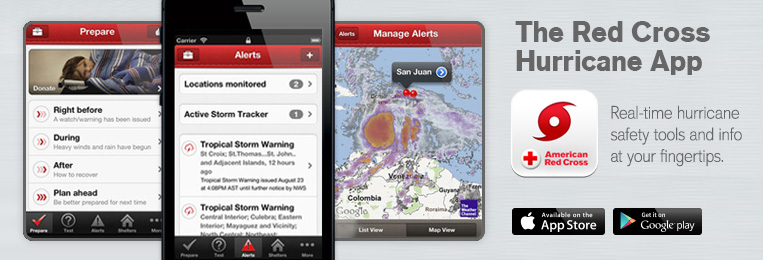
A: The app sends location-based weather alerts from the National Oceanic and Atmospheric Administration. It also includes tips on how to assemble an emergency kit for your family in the event of a power outage or evacuation, an “I’m Safe” button to let loved ones know you are okay, and a real-time map to help you find the location of Red Cross shelters should you need to leave your home. The hurricane app also includes a toolkit with a flashlight, strobe light, and alarm. A Spanish language toggle switch is available. Download the app by visiting redcross.org/apps.
About the American Red Cross:
The American Red Cross shelters, feeds and provides emotional support to victims of disasters; supplies about 40 percent of the nation's blood; teaches skills that save lives; provides international humanitarian aid; and supports military members and their families. The Red Cross is a not-for-profit organization that depends on volunteers and the generosity of the American public to perform its mission. For more information, please visit redcross.org or visit us on Twitter at @RedCross.