Showing posts with label Emergency Response Plan. Show all posts

Friday, February 21, 2020

My Red Cross Story: Doug VanDyke

Meet Doug VanDyke, American Red Cross
Board Member, Chief Executive Officer of
Enquizit, Lifelong Volunteer, and Blood Donor
Written by: Clarice Nassif Ransom, Communications Volunteer

Doug VanDyke,
American Red Cross Board Member (since 2014)

Profession: Chief Executive Officer (CEO) of Enquizit, an application development and cloud migration company headquartered in McLean, Virginia; other highlights include Amazon and Microsoft

Home: Ashburn, Virginia

Family: Wife, three children

Role models who inspired VanDyke’s volunteer leadership: LaRhea VanDyke, mother; Linda Mathes, American Red Cross Chief Executive Officer for the National Capital Region; and Teresa Carlson, former boss and former American Red Cross Board chair for the National Capital Region.

Volunteering is a lifelong pursuit for Doug VanDyke. “Growing up, my mother was involved in every local volunteer activity and Board in the community, and she would bring me with her, so I was exposed to volunteering at an early age,” said VanDyke. “I watched my mother volunteer and assumed volunteering is something you do as an adult—you give back to the community.”

Now, VanDyke is continuing his journey of volunteering by sharing his leadership skills as an American Red Cross Board member. VanDyke is proud of how the American Red Cross responds to disasters to help those most in need, including collecting and delivering blood donations; provides food, shelter, and safety after natural disasters such as hurricanes, floods, or wildfires; and proactively installs smoke alarms in homes to help prevent home fires.
__________________________________________________________________________________

“When others are running away from a disaster, 
the American Red Cross is running straight at it - 
and they stay until it is resolved,” 
says VanDyke.


__________________________________________________________________________________

Since 2014, VanDyke has served as the chair for several American Red Cross events, from Salute to Service Gala fundraisers (which honor active duty service members and veterans) to the 2nd Annual Disaster Preparedness Summit in Washington, D.C., which was held on January 28, 2020.

“The Disaster Preparedness Summit addresses the disaster risks we face in the Washington, D.C. area and explores the impacts a significant disaster would have on our region,” said VanDyke.

“Our goals were for attendees to hear from experts who have real-life experience dealing with complex disaster coordination challenges and for attendees to leave with a better understanding of the hazards we face and how to prepare for and respond to disasters in their communities, organizations and households.”

In preparation for the 2nd Annual Disaster Summit, VanDyke had to rally fellow American Red Cross Board members to support it at a meeting last fall.

“It was a meeting with a lively discussion about speakers, topics, format, and location,” said VanDyke, who then agreed to chair the Summit.

“We were in the office of the American Red Cross in Fairfax; a blood donation center had just been added to the 3rd floor of the building. I was in a good mood, so I walked upstairs and the blood donation center staff were able to take me right away. I have O- blood type and am a universal donor. I have been told O- blood can even be used by premature babies. That is inspiring. Also, both my wife and my father have had open-heart surgeries that required donated blood. Someone before me was there to donate for them. I'm glad I can be part of the virtuous cycle and give to someone else who will need it.”


In the Fall of 2019, Doug VanDyke attended a meeting to plan the 2nd Annual Disaster Preparedness Summit in the American Red Cross office in Fairfax, VA; immediately after the meeting, VanDyke donates blood on the 3rd floor in the building's new blood donation center. 


Another American Red Cross leadership effort VanDyke was involved with was in 2018 when he was employed with Amazon Web Services.

“The American Red Cross, Voice Foundry, and our team at Amazon Web Services set up an emergency call center to help those impacted by Hurricane Florence,” said VanDyke.

“We had more than 100 Amazon Web Services’ employees who volunteered to staff the call center. We serviced more than 1,000 calls. Employees volunteered from around the world, even as far away as Singapore, to staff the call center and help those in need. Many of these calls were very emotional, helping reconnect loved ones.”

VanDyke’s leadership experience with the American Red Cross has helped him both personally and professionally.

“Personally, it provides me a channel to give back,” said VanDyke.

“I see direct results, and I can contribute through multiple channels. Professionally, it has helped me build a support network outside my company—people I like and trust.”
__________________________________________________________________________________

"Volunteering is one of the best ways people can feel connected to each
other and to their communities," according to VanDyke.
__________________________________________________________________________________

“There is more to life than making money,” said VanDyke.

“Volunteering is a great way to improve the overall quality of life in our communities. It is personally rewarding, by helping us learn skills and develop friendships. It is also valuable to the community by providing for needs that aren't being covered by government or businesses.”

As Chair of the 2nd Annual Disaster Preparedness Summit, Doug takes preparedness seriously and encourages everyone to have an emergency plan. If you don't have one yet, here's what you can do to prepare yourself and your family for a disaster:

Create Your Emergency Plan in Just 3 Steps

1. With your family or household members, discuss how to prepare and respond to the types of emergencies that are most likely to happen where you live, learn, work and play.

2. Identify responsibilities for each member of your household and how you will work together as a team.

3. Practice as many elements of your plan as possible.

For more information about creating a family emergency plan, including templates to help you be organized, go to: https://www.redcross.org/get-help/how-to-prepare-for-emergencies/make-a-plan.html

Make a difference in your community. Click here to become a Red Cross volunteer.

Click here to learn more about donating blood with the American Red Cross near you.

Tuesday, September 4, 2018

Get RedCross Ready for National Preparedness Month!

By Carly Flumer, Volunteer

National Preparedness Month, recognized each September, provides an opportunity to remind us that we all must prepare ourselves and our families now and throughout the year. This is an iniative recognized nationwide through a number of organizations.

With September being National Preparedness Month, there’s no better time to make sure you are prepared for an emergency like the present. While becoming prepared can seem like quite the effort and take a lot of time, it can actually be a fun bonding experience for the entire family.


The first step is compiling an emergency kit. The Red Cross provides survival kits with the proper supplies you may need in case of an emergency or natural disaster. However, you can also build your own! You should have the following in your kit:

  • Water (at least one gallon per person per day)
  • Food, such as non-perishable and easy-to-prepare items
  • Flashlight
  • Extra batteries
  • First aid kit
  • Copies of personal documents
  • Family and emergency contact information

To see the whole list, visit https://www.redcross.org/get-help/how-to-prepare-for-emergencies/survival-kit-supplies.html.

The next step is to make a plan. Discuss with your family how to prepare and respond to different types of emergencies that are most likely to happen, including fires, earthquakes, floods, tornadoes, and hurricanes. Designate responsibilities to each family member making sure each one knows their part in keeping everyone safe. Finally, practice your plan! You can find free templates of disaster plans here: https://www.redcross.org/get-help/how-to-prepare-for-emergencies/make-a-plan.html.

Finally, be informed. Learn about the different types of emergencies and disasters that may occur in your area and how local authorities plan to notify you. Know what actions to take to protect yourself and your family, and create emergency contact cards for all household members. Get your Emergency contact card template here: https://www.redcross.org/content/dam/redcross/National/m4240194_ECCard.pdf

Happy preparing!


Tuesday, August 30, 2016

Freshmen 15? The flu? Blizzards? Don’t worry, we've got you covered!

Written by: Harsha Jha, volunteer

The time has come for all new university freshmen to say goodbye to their childhood bedrooms and head off to their dorms. The parents are probably trying to keep it together as their child is shopping for bedding, supplies, and the much-needed mini fridge; but deep inside they just want to hold on and never let go of their kid. So hey parents and college freshmen, as you prepare to start this new part of your life, here are some tips from the American Red Cross.

  1. Have a fully stocked First Aid Kit. You will get sick in college and without mom and dad, there will be no one to get you medicine. So keep a first aid kit for all those small emergencies. Not sure what to take? Check out the one at the Red Cross Store!
  2. Know your new environment. Is your college in a hurricane prone area? Or prone to flooding, tornadoes or blizzards? Know what kind of climate to prepare for and make sure you have the proper clothing and items. We highly recommend having the Emergency app downloaded to keep you prepared. Here is a list of all the apps available to keep you safe.
  3. Seek help. If you are feeling very sick or just under the weather, know where the health center is on your campus. Also, remember to write down any medications you are allergic to, your insurance company, etc.
  4. Eat healthy. There is going to be a lot of good food around, but try your hardest to stay fit too. Free gym? Try to go 2-3 times a week. Keep healthy snacks in your dorm for all those midnight snacks during finals week and most importantly, eat breakfast!
  5. Be prepared to help peers. There will be many students who will not be ready for the new lifestyle, so why not be the hero on campus? Teach them about emergency preparedness or maybe even learn CPR or take a first aid class. College is all about trying new things, so why not start now? Check out some American Red Cross classes to get started.
  6. Call your parents. In the moment, you will be so busy with welcome week, new friends and new classes, but remember at the end of the day to just send mom and dad a text or call them. It brightens their day and trust me it will have you feeling better too.
College is all about limitless opportunities; so don’t be afraid to seize them. With all of these tips, you are prepared to start your new life in at a college or university! Good luck from the American Red Cross!

Tuesday, August 25, 2015

Typhoon Relief in Saipan - Up Close and Personal

Written by: Reed Mszar, intern

On August 2, Typhoon Soudelor made landfall in the United States territory of Saipan, located approximately 120 miles north of its sister island, Guam. No more than a week and a half later, the island of around 50,000 people faced yet another serious disaster - Tropical Storm Goni. These two dreadful storms, not only left a great deal of damage and destruction to the infrastructure on the island, but they also took an emotional toll on all of its residents. The following is a summarized account from Dawn Tritch, an American Red Cross volunteer who is currently at the front lines helping those in desperate need.


“At the American Red Cross, I volunteer for eight hours each day, from about noon to 8 p.m. or whenever the day finally ends. As one of eight mental health workers, I am responsible for the mental health and sanity of about 30 case managers, the staff that support[s] them, and a call center of 20 workers at another location 20 minutes away. I am also responsible for answering people's questions and making appointments for the case managers, and basic crowd management - diffusing angry people in line and trying to sort their squabbles out before a riot breaks out. We have had about 2,000 people showing up in lines each day, in fierce heat, with little to no shade, water, or food (the tempers are ugly). It takes very little to spark arguments and fights. The police have been assisting us fortunately or it [the crowds] would be uncontrollable, nevertheless, sometimes a mental-health approach is more calming that the brute-force of the police. So that is my role, working the line, sorting things out, getting medical help when people pass out, and listening to burn-out with the case workers (30 to 2,000 is just impossible),.

We have been told that it is a minimum of six months before we will get power (because all the island generators were destroyed, as well as most of the lines). We were able to locate a small generator, one that would have been about $450 in the states, but was over $2,000 here, so we have a bit of power each evening, but it is not much and it is expensive to run as gas is over $5 per gallon. In addition, because there is no power, there is also little to no water except when it rains. Since households are limited to five gallons of drinking water and ten gallons of non-drinking water for everything else per day (laundry, bathing, sanitation, cooking, cleaning, etc), one must drive to one of the military posts to get it - a real challenge for the many who don't have cars or other means of transportation.

Food is coming to the island, but is still limited and prices continue to rise. Internet and cell reception are very sporadic and often non-existent. There is no TV except the local station, but that is also sporadic. Gas is limited to ten gallons per household per day, and lines can be exceedingly (hours) long. A reliable gas source is much needed here. Also, ice is quite the luxury as there are only 1600 five-pound bags available on the island each day, all for 50,000 residents and businesses (which means there is usually not enough for the Red Cross). It is for this reason that each night I collect all the hand-sized towels, take them home and wash them. Then, I roll them up and put them in the freezer, still wet, so they freeze while our generator is running.  I later take them to the Red Cross and hand them out to the volunteers to stay cool. It does seem to help since there is little to no air conditioning or air circulation in the bunker [where] we are working out of. Laundry is a challenge for our little generator. So much of our clothes were muddy either from the mildew as a result of the standing water from the storm or the lack of necessary air-circulation units. Last, but not least, the mosquitos are vicious and there is no bug spray to be found anywhere on the island.”


We at the American Red Cross in the National Capital Region would like to thank Dawn and the numerous other Red Cross volunteers in Saipan and around the world for the selfless work you do helping to alleviate human suffering, even in the most dangerous environments. You all truly embody the mission of the Red Cross and we could not be more proud of all your hard work providing relief to thousands of people. If you too would like to make a difference and support our efforts, you can help by donating to Red Cross Disaster Relief by visiting redcross.org, calling 1-800-RED CROSS or texting the word REDCROSS to 90999 to make a $10 donation. Donations to Disaster Relief will be used to prepare for, respond to, and help people recover from disasters big and small.

Monday, August 24, 2015

Be Red Cross Ready - Hurricane and Tropical Storm Safety Guide

Written by: Reed Mszar, intern

Hurricanes are strong storms that cause life- and property- threatening hazards such as flooding, storm surge, high winds, and tornadoes. Preparation is the best protection against the dangers of a hurricane. Tropical Storm Danny is making its way through the Eastern Atlantic Basin, and with the potential for more storms to come this summer, here are a few key points that could help you prepare for the worst and clear up some common misconceptions. For more information on Tropical Storm Danny and its current path, follow the attached link: http://www.weather.com/storms/hurricane/news/hurricane-danny-tropical-storm-danny-atlantic-2015. We hope this information helps and that you have a safe remainder of your summer.


Q: What is the difference between a ‘Hurricane Watch’ and a ‘Hurricane Warning’?

A: Hurricane Watch: When hurricane conditions are a threat within 48 hours. One should review emergency plans and keep informed and be ready to act if a warning is issued.
Hurricane Warning: When hurricane conditions are expected within 36 hours. One should complete storm preparations and leave area if directed to do so by authorities.


Q: What should I do to prepare for a hurricane or tropical storm?

A: To best prepare for a hurricane or tropical storm, one should do the following:
-Listen to a NOAA Weather Radio for information from the National Weather Service.
-Check your disaster supplies and restock as needed.
-Bring in anything that can be picked up by the wind (bicycles, lawn furniture, etc.).
-Close windows and doors. If you do not have hurricane shutters, close and board up all windows and doors with plywood.
-Turn refrigerator and freezer to the coldest setting in case of power outage.
-Turn off propane tanks and unplug small appliances.
-Fill your car’s gas tank.
-Talk with members of your household and create/practice an evacuation plan.
-Learn about your community’s hurricane response plan.


Q: What supplies should I have on hand to prepare for a hurricane?

A: To ensure that you are prepared for the worst, the following items should be on hand:
-Water - at least a 3-day supply; one gallon per person per day
-Food - at least a 3-day supply of non-perishable, easy-to-prepare food
-Flashlight
-Battery-powered or hand-crank radio (NOAA Weather Radio, if possible)
-Extra batteries
-First aid kit
-Medications (7-day supply) and medical items (cane, contact lenses, etc.)
-Multi-purpose tools
-Personal hygiene items
-Copies of personal documents (medication list, passports, birth certificates, etc.)
-Cell phones with chargers
-Extra cash
-Emergency blanket
-Map(s) of the area
-Baby/pet supplies if applicable
-Extra set of car keys and house keys
-Extra clothing, hats, and sturdy shoes
-Rain gear
-Insect repellant and sunscreen


Q: What should I do following a hurricane?

A: The following is a list of steps one should take in order to safely return home following a hurricane and prevent future dangerous situations:
-Continue listening to a NOAA Weather Radio or the local news for updates.
-Stay alert for extended rainfall and subsequent flooding.
-If you evacuated, return home only when officials say it is safe.
-Keep away from loose or dangling power lines and report them immediately to the power company.
-Stay out of any building that has water around it.
-Inspect your home for damage. Take pictures of damage for insurance purposes.
-Use flashlights in the dark. Do NOT use candles.
-Avoid drinking or preparing food with tap water until you are positive it’s not contaminated.
-Check refrigerated food for spoilage.
-Watch animals closely and keep them under your direct control.
-Use the telephone only for emergency calls.


Q: Why should I download the free Red Cross hurricane app to my mobile device?

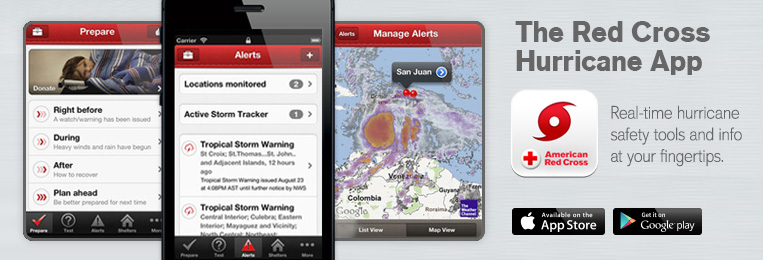
A: The app sends location-based weather alerts from the National Oceanic and Atmospheric Administration. It also includes tips on how to assemble an emergency kit for your family in the event of a power outage or evacuation, an “I’m Safe” button to let loved ones know you are okay, and a real-time map to help you find the location of Red Cross shelters should you need to leave your home. The hurricane app also includes a toolkit with a flashlight, strobe light, and alarm. A Spanish language toggle switch is available. Download the app by visiting redcross.org/apps.


About the American Red Cross:

The American Red Cross shelters, feeds and provides emotional support to victims of disasters; supplies about 40 percent of the nation's blood; teaches skills that save lives; provides international humanitarian aid; and supports military members and their families. The Red Cross is a not-for-profit organization that depends on volunteers and the generosity of the American public to perform its mission. For more information, please visit redcross.org or visit us on Twitter at @RedCross.


Wednesday, January 28, 2015

Celebrate National Blood Donor Month

The Season of Giving Continues

Written by: Kathleen Mundie, Red Cross Volunteer

Did you know that one pint of blood can save up to three lives?

The American Red Cross is saluting all of its blood and platelet donors for their life-giving contributions to ill patients. Blood and platelet donors have helped supply community and military hospitals with the blood they need for transfusions, cancer care, and other treatments. We commend our donors for their service and encourage the whole community to contribute lifesaving resources.

It is crucial that the community at large comprehend the importance of donating blood.  Hospitals are always in need of all types of blood, especially type O negative, A negative, and B negative. That is because every two seconds someone in the US needs blood. To learn more about all blood types and about what happened to donated blood, visit RedCrossBlood.org.

Are you ready to roll up your sleeves? Start a SleevesUp virtual blood drive campaign to honor a special occasion with a blood drive. You can even download a Blood App to register for a local blood drive. There’s so many different ways you can help make a difference by saving a life!

Thursday, September 25, 2014

6 Steps for Preparing Your Business for a Disaster

By Michelle Fordice, Volunteer Contributor


Is your business ready to respond to - and recover from - a natural disaster? According to the Insurance Information Institute, 40% of businesses fail after a natural or man-made disaster. Moreover, Americans spend about 20% of their time at work and we all want to be safe while we 're there. Here are six steps to help your business prepare for a disaster.

Commit to preparedness

Think about who you need to get involved to prepare your business for a potential disaster. Is your senior leadership committed? Who on staff needs to be a part of developing how the organization responds to emergencies? What resources are available? 

Conduct a hazard vulnerability assessment

Know your area. Consider what situations are most likely to arise. For example, when it comes to extreme weather, D.C. is most likely to suffer from tornadoes, snow, and floods. Are you ready for those situations?

Know your business. Are there any unique factors to your industry or the area that your office is located that make you more susceptible to a particular kind of emergency? 

Asses your staff and resources. Know the physical capacity, supplies, equipment and human resources of your organization. Have you spoken to your insurance carrier to see what situations are included in your coverage? Who on your staff has a cool head in tense situations? Who has been trained in basic first aid and CPR? 

Develop an emergency response plan

Create a team that develops and maintains an emergency response plan for the business. Prepare a written emergency response plan that addresses the hazards you have identified. Are staff members assigned to particular tasks within that plan?  What are escape routes? Do you need to make any considerations for the special needs of employees with disabilities and medical conditions?

Prepare a Continuity of Operations Plan (COOP). Are you prepared to perform essential business functions under a broad range of circumstances? What would happen if you lost access to your records or your facility? Are your suppliers prepared for an emergency? After you know your staff is safe, how will you inform your customers that the service you provide may be interrupted?

Implement an emergency response plan

Train your employees on the new plan. Consider sponsoring a training session for employees in topics like first aid and CPR. (The Red Cross offers training programs for businesses.)  

Acquire safety equipment and supplies.

Provide employees with resources to be ready at home, on their commute, and at work. Make sure you have emergency contact information for each employee in a place where you could access it during an emergency. 

Test and improve your emergency response plan

Conduct drills. People are more likely to respond appropriately when they have had practice. Remember that you should repeat drills at least annually and that new hires will need to be trained.

Consider how everyone performed on the drill. What didn’t work and what items were you missing?

Make improvements. 

Help your community prepare

No business survives without the community it serves. Once you have prepared your business, help prepare your community. Consider hosting a blood drive or donating supplies or services to a local emergency effort. 

Think you’re ready? Try taking The Red Cross Ready Rating assessment. This is a free program that measures your organization‘s level of preparedness and provides tools for making improvements.

Additional Resources:

American Red Cross Ready Rating 123 Assessment
American Red Cross Ready Rating Resource Center
Small Business Association Emergency Preparedness Resources
Ready.gov for business
University of Florida Disaster Handbook