Showing posts with label walter reed. Show all posts

Friday, October 4, 2019

Aslan and Digory: Two of our Furriest Volunteers

Written by Sandy Habib, Marketing Manager

Honoring an American Red Cross volunteer at a ceremony typically involves a handshake, but with this special volunteer team, you need to shake a few paws as well.  

Jen O’Keefe, featured here in a Red Cross vest, and Aslan
receiving their award at Walter Reed.  Digory is not in attendance. 
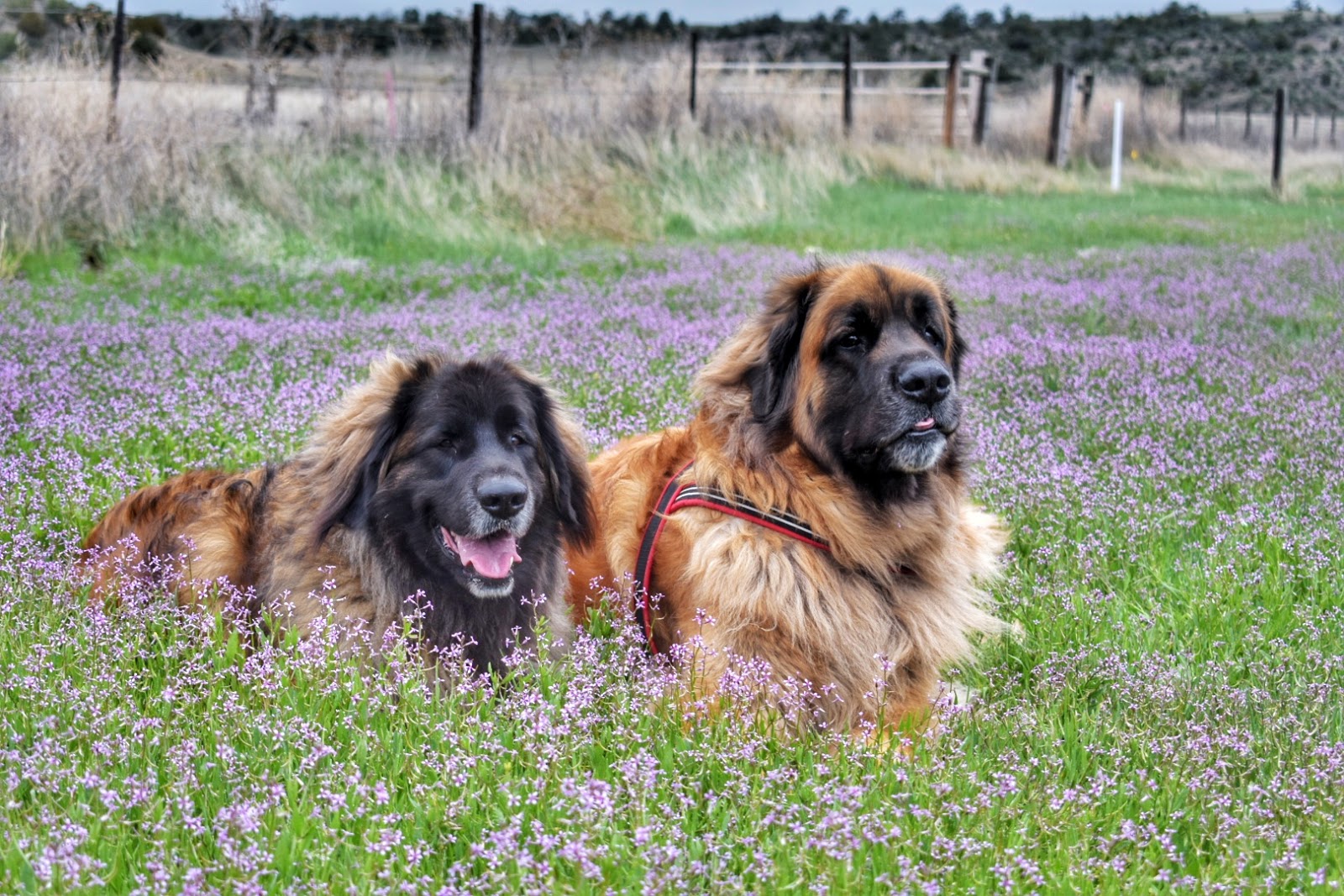
Meet Dr. Jen O’Keefe, a veterinarian at SouthPaws, and her two male purebred Leonbergers.  The trio was recently recognized as the Walter Reed National Military Medical Center’s Volunteers of the Quarter.  Each of the dogs volunteer close to 100 hours a year, including at the Walter Reed Hospital and its clinics as well as at numerous schools, libraries, rehab centers, nursing homes and disaster sites. 

“The dogs love serving as therapy dogs.  It’s the highlight of their week.”


The two brothers out and about on a volunteer assignment.
Aslan is 8 years old and weighs 160 pounds; Digory is 5 years old and 120 pounds.  Aslan has a sweet, gentle demeanor, while Digory is more outgoing and active, but both love their roles as volunteers.  They especially love working with children.  As therapy dogs, their jobs require them to make appearances, get showered with attention and brighten people’s days.  An occasional dog treat is surely an appreciated incentive as well.

Both dogs had to go through an extensive process to qualify as Red Cross therapy dogs.  After almost a year as volunteers in various locations, they needed to pass Good Citizen Tests, which are certified by the American Kennel Club.  Then they each had to go through a Red Cross screening before being approved to serve at Red Cross sites.  Aslan earned his Red Cross certification in 2014, while Digory earned his in 2018.

Jen and Aslan resting after volunteering. 
In the years since, they have been very busy.  Besides making the rounds at their usual local sites, Jen and the dogs have traveled to other states in response to various disasters.  She will take them anywhere that the dogs will be beneficial, including locations where there has been a crisis or natural disaster.

Wherever they go, the dogs turn heads.  Initially, people can’t help but notice them for their size.  Before long, though, it’s their happy, calming energy that draws people to interact with them.  Jen explains:

“It’s amazing to walk into a room and see everyone smile.  The dogs and I
get as much out of the experience as the people that we visit.”

The Red Cross is grateful that these three are so committed to serving the community!

If you want to learn more about Aslan and Digory, you can follow them on Facebook.  They each have their own page: facebook.com/aslan.leonberger.7 and facebook.com/digory.leonberger7.


Friday, August 17, 2018

My Red Cross VolunTEEN story: Charles Lewis

By Charles Lewis, VolunTEEN

Over the summer, I was given the amazing opportunity to participate in the Red Cross VolunTEEN Program at Walter Reed National Military Medical Center. The VolunTEEN Program lets teenagers from across the DMV volunteer in different clinics at Walter Reed.

I learned about the VolunTEEN Program through my mother’s friend, whose daughter participated during the summer of 2017. I asked her about her experience at Walter Reed and she said that she loved it and had a great time. Her positive response was one of the major factors that played into my decision to apply. I had considered becoming a doctor before I even heard about the program, and so I thought that participating would help provide clarity in my future as this program would expose me to the work environment of a hospital.

The application process started in February of this year, and it required a 500-word essay and one or two letters of recommendation from a teacher, coach, or mentor. I was notified that I got into the program during the middle of May, and I was ecstatic that I would be able to spend my summer doing something really meaningful and beneficial.

Orientation took place the last week of June, where all the VolunTEEN's received a tour of the Red Cross Office, obtained badges and name tags, learned more about how the Red Cross supports the hospital and received information on what department we were assigned to. We also received an in-depth training on patient privacy from one of the hospitals Privacy Officers.

I was assigned to the Pediatric Sedation Unit (PSU), where I work two days a week. While I’m there, I clean beds, fill patient folders, and assist with organization in the storage area. My favorite thing to do in PSU is watch procedures. When my shift coincides with a procedure, I’m allowed to go into the operating room and watch. Thankfully, none of the procedures have been too gory, which is a plus because I do not tolerate blood well at all, which isn’t ideal for someone who wants to be a doctor. The doctors are always so happy to see kids watching their procedures, and will sometimes stop to show us stuff. Speaking of great staff, the nurses who work in PSU are amazing. They’re so friendly and nice and they’ve been super informative about the general operations of the hospital.

When I’m not working in PSU, I’m usually helping out in the Red Cross Office. I usually re-stock the storeroom, take calls, or deliver items requested by patients throughout the hospital. The best part about working in the office is definitely taking the Kids Cart. The Kids Cart is a cart which gets filled up with games, toys and boxes of Girl Scout Cookies, and is taken around to all the pediatric sections of the hospital, where kids and their parents can take games and toys and enjoy some cookies. Seeing the kids’ faces as they see all the games and toys, and the variety of Girl Scout Cookies roll by, is amazing and super rewarding because it confirms that what I’m doing is really important and beneficial. Something else that is confirmed by the Kids Cart is that Trefoils (in the blue box) are indeed superior to all other forms of Girl Scout Cookies because they disappear off of the cart at a speed that would make you think that teleportation has already been invented.

The final thing that takes place in the VolunTEEN Program are Medical Awareness for Teens (MAT) programs. These programs took place throughout the course of the summer and gave the VolunTEENs an inside look at specific practices in the hospital. We would go to different parts of the hospital and see presentations given to us by doctors in different departments.


The first MAT program was about prosthetics and dentistry at Walter Reed. I learned about the process of creating different types of prosthetics, and even heard stories of people who had received prosthetics. We got to see different prosthetic body parts that were made for wounded warriors, including eyes, noses, ears, hands, and whole halves of faces. The stories of the wounded warriors who got prosthetics was very intriguing and inspiring. After the prosthetics section, two dentists came over and talked to us about dentistry in the military and the path they each took to become military dentists.

The second MAT program was about physical therapy (PT) and occupational therapy (OT). We learned about the differences and similarities between the two, and how each therapy type goes about providing support to patients. In my opinion, physical therapy is the “fun therapy” while occupational therapy is the “interesting therapy”. That’s not to say that OT would never be fun or that PT isn’t interesting, but they both have different strong points. While we learned about PT, we took part in some therapeutic relay races where two teams competed to see who could do the form of therapy properly and the quickest. We put rubber bands around our legs and attempted to walk along the sidewalk outside, however for some, more time was spent trying to stand back up then actually walking. We also tried to stand on an unstable rubber circle contraption and throw a ball back and forth, but for some people that was just as unsuccessful as the first race.

The final part of PT was going to see the Computer Assisted Rehabilitation Environment (CAREN) lab, which essentially is a huge virtual reality game that helps patients in their recovery. They have a skiing simulation, a hiking simulation, a hit-sharks-with-a-boat simulation. Overall, it was a super cool experience, which really displays how advances in technology can be used for medicinal purposes. While OT didn’t have any virtual reality contraptions or children falling over, it did have a really interesting way of providing therapy. There was a kitchen in OT, where patients will go and learn how to cook and become familiar with a home environment, which is really important. Additionally, depending on where the patient was injured, different board games would be played with the patient. For example if the patient had trouble pinching his/her finger and thumb together, they would play Jenga where you are forced to make a pinching motion to move the blocks. Overall, both forms of therapy were interesting and cool, and it was great that I got to see how they work.

The final MAT program was working with ultrasounds, forensics, and the morgue. Which took place in the Uniformed Services University (USU). I learned how to use an ultrasound, which I found to be the best part of the tour, and got to practice on my fellow VolunTEENs. After that, we watched a power-point presentation about forensic pathology and learned about different types, forms and manners of death. We were then able to identify which form or manner is present based on marks on the body. The final part of the MAT program was the morgue in the basement. We split into groups and looked at bodies that have been dissected to see what the body really looks like inside. That was by far the most interesting part of the whole VolunTEEN Program because I got to see the complexities and intricacies of the body.

Walter Reed National Military Medical Center
The VolunTEEN program has been an amazing and memorable experience for me, and I am dreading the day the program ends. All the people at Walter Reed are so friendly and welcoming that you really feel like you are part of a community of fantastic people who want to give back to their country. The VolunTEEN program has shown me how much volunteering can help the lives of many people and I am definitely going to pursue more volunteer opportunities in the future.

To learn more about our Service to the Armed Forces program, visit: https://www.redcross.org/local/washington-dc/about-us/our-work/service-to-the-armed-forces.html. 

Thursday, April 26, 2018

Our Red Cross Volunteer Story: Clown Judy and Clown Gary

Written by: Rose Ellen O’Connor, volunteer


Judy Gleklen Kopff stood outside the Fisher House at Walter Reed Army Medical Center on Christmas Eve 2004 and cried. She and her husband, Gary, were scheduled to entertain wounded warriors and their children in the Fisher House dining room. She’d been volunteering as a clown since 1996, but this was her first experience entertaining the wounded, and she was scared. She didn’t know how she’d deal with double and triple amputees.

She rang the doorbell, and as soon as she and Gary entered, a three-year-old boy jumped off his father’s lap and ran to her, crying, “Daddy! Daddy! It’s a clown!” He latched onto her leg and wouldn’t let go.

“I dried my tears as unobtrusively as possible and started making balloon animals for children who were creating an ever-expanding line leading to my husband and me,” Judy recalls. “At that moment, their parents were not patients missing arms or legs or eyes. They were parents enjoying the smiles and squeals of laughter of their children on Christmas Eve. We call ourselves Giggle Therapists.”

“Clown Judy,” now 71, and “Clown Gary,” now 72, learned in December 2004 about the Red Cross program at Walter Reed, underwent training and have been Red Cross volunteers ever since. They entertained at the Walter Reed Army Medical Center in Washington, DC until it closed in 2011 and then switched to Walter Reed National Military Medical Center in Bethesda, MD.

Judy spent her Federal government career as a civilian working at the Pentagon in the Office of the Secretary of Defense.  After taking an early retirement at the age of 49 in 1996, she went back to work for the Secretary in 2003 to work on issues related to Iraq and Afghanistan.  Her final position as a chief of staff in an office dealing with battlefield contractors ended in 2008. Her intense, high profile jobs didn’t dampen her love of lightheartedness. It was at an office Christmas party in 2004 that she made her connection to Fisher House. Standing next to Defense Secretary Donald Rumsfeld’s wife, Judy mentioned that she volunteered as a clown but didn’t have any place to entertain on Christmas. Mrs. Rumsfeld gave Judy the name of the person in charge at Walter Reed’s Fisher House.

These days Judy and Gary find themselves comfortable in any setting with wounded warriors and their families. For example, they’ve entertained at the Military Advanced Training Center (MATC), where the severely wounded go for intense physical and occupational therapy. At their first visit, they cautiously approached the head nurse and asked if they could enter MATC and interact with wounded warriors. The clowns received a thumbs up and entered accompanied by the head nurse’s service dog, who seemed to be saying, “These clowns are OK to be with you.”

The head nurse explained that this was the toughest physical therapy for young warriors now fitted with new arms and/or new legs and working hard for many hours at a time.  Clown Judy and Clown Gary were invited to distract the patients as they entered in full clown regalia, while carefully watched by MATC staff and the head service dog.

About four years ago, they were again at MATC and saw two patients – both double amputees -- lying on their stomachs on cots next to one another and working with physical therapists. Clown Gary thought one was asleep, so he started to show the other one a card trick. The patient they thought had been asleep turned and said, “Hey, I know that trick.” Gary then handed him the deck of magic cards and was relieved and pleased to have the young USMC corporal take over the magic demonstration for his band of brothers.

“We just watched,” Judy says. “We all were having fun, and the head nurse’s goal was met because our antics distracted the severely wounded patients for a few minutes from yet another long day learning how to walk on new prosthetic legs or how to prepare to hold their young children with new prosthetic arms.”

Gary walks the Walter Reed corridors “locked and loaded” with his multicolored squirt gun, which cannot fool the wounded warriors who know all too well the appearance of real guns.  He invites mayhem as he offers the use of his squirt gun to some patients.  As a highly decorated USMC General was walking amidst injured Marines who were perhaps one-third his age, Clown Gary mischievously whispered, “Anyone want to squirt the General?” One young double amputee seized the opportunity. 

“As the squirt gun did its worst, both men, as well as nearby staff and other patients, all broke into loud laughter,” Judy recalls.

Gary says, “When I get such laughter, it makes me feel that my mission is being accomplished. We don’t get paid in coin. We get paid in laughs.”

Sometimes the laughter and smiles are mixed with tears. One summer Judy and Gary were at a barbeque for wounded warriors and their families. Gary was pumping up a balloon to shape into a dog for a young man in a wheelchair; he wanted the balloon dog for his young son. It was a hot day, and the balloon accidentally popped. The sound instantly took the young combat veteran back to his memory of being severely wounded by an IED in Afghanistan. The patient started to cry, as did Clown Gary. Impulsively, both men hugged each other.

“Don’t worry,” the patient said to Gary. “We need to keep going so I not only have a toy balloon for my son, but I can also move a step closer to learning how NOT to react to loud noises now that I’m stateside.”

Judy and Gary understand smiling through tears. In the mid-1980s, they tried to conceive five times through in vitro fertilization. Judy also underwent four major surgeries to open her fallopian tubes, and then they turned to a surrogate mother. She turned out to be a fraud.

“At that point, I decided no more. We’re not going to try any more to have a baby. My experience of not being able to have children was one of the most difficult, most painful experiences of my life,” Judy says.

Once the decision to stop trying to have children was made, Judy stepped up her volunteering, whereas Gary turned to serving on the Board of Outward Bound, where he first learned to mountain climb in his home state of Colorado.  His climbing took him to all seven continents as he climbed some of their highest mountains, including the Vinson Massif in the Antarctic in 1991 and Everest in 1992.

In 1996, Judy discovered clowning. She’s made balloon creations and performed silly magic tricks for orphans and polio patients in Vietnam, local pediatric cancer patients, DC firefighters and police, elementary school children, and teenaged Maasai warriors in Kenya. She’s also entertained nursing home residents, foster families, kids in homeless shelters, Johns Hopkins Medical School students, the Chairman and Vice Chairman of the Joint Chiefs of Staff, and at the Million Mom March. Gary has accompanied her since his first venture to Walter Reed on Christmas Eve 2004.

“The joy in my heart when I see smiles on the faces of the people I entertain confirms that all my efforts are worthwhile,” Judy wrote for her upcoming Cornell University 50th reunion book.

It’s not always joyful. Sometimes patients just want to talk, and Judy and Gary listen. “Some of their stories are overwhelming, and I sit and listen and cry,” Judy says.

Every so often their clowning can have big consequences. In December, Judy volunteered as a clown at an Easter Seals dinner reception, and a woman came up to her and told her that she had met her husband almost three years ago because of Judy. Clown Judy had made a balloon flower for the woman’s husband-to-be at the 2015 DOD Warrior Games in Quantico, VA (competitions for wounded, ill, and injured service members and veterans). He had used the flower to introduce himself to the woman, and now they’re married and have a baby.

“That made me cry,” Judy said, “but they were happy tears.”

It takes Judy three hours to transform herself into a clown. First, it takes her 45 minutes to an hour to make a three-foot tall hat out of balloons. Then she paints a big heart on each cheek, outlining in black eyeliner and coloring in with red lipstick. She attaches purple, gold, pink and black false eyelashes for the upper lashes and draws 10 long, black eyelashes out of eyeliner underneath each eye. She puts on her costume of polka dot bloomers, a red petticoat, a blouse emblazoned with clown decals, a puffy skirt with USMC stripes on the sides and a satin vest embroidered with “CLOWN JUDY” on the back.  Finally, she places a red foam ball on her nose and puts on a red wig.

Judy grew up a twin, the fourth of five children to Leo and Honey Gleklen. She was born a triplet, but one sister died when she was just a few months old. The family lived in Providence, RI, and Judy describes them as “silly, happy and openly affectionate, where kisses and laughter were the highlights of our daily lives.” The five children were always encouraged to help less fortunate people and to make them smile, she says, planting the seed for her becoming a clown many years later. They were encouraged to do volunteer work, and she started at age 6, performing ballet recitals and singing with her twin sister at nursing homes. She was also a Red Cross Candy Striper in high school and did a variety of volunteer work as an undergraduate at Cornell University.  Judy’s mom was always active in non-profit organizations, and she and her siblings continue that tradition.

Gary retired several years ago from his work as a financial strategy consultant and expert witness in lawsuits helping unravel the mess made by some of the largest banks in the US and Europe.  He grew up in Denver with an older sister. His mom was a devoted Red Cross volunteer, called a Gray Lady. His parents, Joseph and Claire Kopff, stressed academics, and Gary went east to Yale College.  After graduation, he studied at Cornell’s Graduate School of Management, where he met Judy.  They married in Providence in 1969, after Judy finished graduate studies in art history in New York City.
Today, Judy and Gary find fulfillment in the volunteer work they do.

“It makes me feel good when I bring smiles to the faces of children and ‘children-at-heart,’ as I call the adults,” Judy says. “Most adults like to smile and like to feel good. And If I can make them and their families feel good for a few minutes so that they can forget their pain, then that’s a good thing.”

Thursday, March 15, 2018

Our Walter Reed Volunteer Story: Karel, Therese & Carol

Written by: Rose Ellen O’Connor, volunteer


Karel Fick’s son, an Air Force Captain, was stationed overseas, moving in and out of Afghanistan in 2005, and she was endlessly worried about him. She was used to the military – her father was a Navy Lieutenant who talked about his service in World War II and her husband served as an Army Lieutenant in Vietnam – but that didn’t help because this was her son. “It’s a mother’s job to worry,” she says. Karel was relieved and grateful when he came home safely and decided she wanted to help other military moms. So she turned to the Red Cross and started volunteering at Walter Reed National Military Medical Center in Bethesda, MD.

Therese Shell, Karel’s neighbor, heard her stories and decided she wanted to volunteer too. It was a good fit, she says, because her husband is a retired Navy Commander and her son is a Navy Lieutenant Commander.

Carol DeLeon wanted a change after 18 years as a volunteer in the White House correspondence department. A retired nurse, she wanted something in the health field and settled on Walter Reed.

Now all three women come together every Tuesday to try to make life a little more pleasant for the families of patients at Walter Reed. Their duties range from passing out basic needs items, such as clothing and toiletries, to asking hospital personnel for an update on a patient’s condition, to sitting and listening to a family member talk. They also hand out toiletries, give directions to local resources and explain how to get on the metro. If a family is in crisis, they’ll set up a room with snacks and water for them.

“Our goal is just to be soothing in a really stressful time,” says Karel. “We walk around the waiting room looking for families that might need a moral support. Usually, we let them talk and we tell them their patient is in the best place they could possibly be, you know, Walter Reed, and let them know we’re there if they need anything.”

Karel is the team leader for the Surgical Waiting Room and handles scheduling for all the volunteers. She works in the Intensive Care Unit (ICU). Carol, her co-team leader, helps with scheduling and works in the ICU, as well. Therese volunteers in the Surgical Waiting Room and brings in coffee and donuts every Tuesday. She also fills in for Karel or Carol if they can’t be in the ICU. “The coffee and donuts are a big hit,” Therese says. “I get that set up and everybody’s so happy to see it,” she says.

The volunteers can have a profound effect on a family. Last month, a retired Navy Commander was vacationing with his family in the Caribbean and had to be rushed to Walter Reed for emergency surgery. His wife and two adult sons followed him in. Karel was off and Therese was filling in for her. Carol and Therese brought sweat pants and sweat shirts for the family, along with toiletries. It was a no-brainer, they said.

“Coming from the Caribbean to this area in February was quite a shock,” Carol says. “We were making them a little more comfortable. They felt more secure that we were helping them.”

When the retired Navy Commander and his family left, they offered grateful praise for the volunteers specifically highlighting the ways in which they went out of their way to support their family, Marin Reynes, the Walter Reed volunteer supervisor says.

“Their feedback was solely focused on the Red Cross volunteers and the impact they had on their stay,” Marin says. “Karel, Carol and Therese may downplay their service, but they change lives every Tuesday.”

Sometimes things that seem so small can mean so much to the patients and family. The hospital is always dry, and patients and their family members are constantly looking for chap stick. Karel, Carol and Therese keep a ready supply.

“Somebody once said to me, you know handing out a chap stick or a comb or whatever is no big deal to you,” Karel says, “but to us it can make or break our day.”

Sometimes, the volunteers find themselves supporting family members in unusual and simple ways. A woman had been at her husband’s side for four days and hadn’t had a shower. Karel and Carol came to the rescue.

“We brought her some shampoo and conditioner and nice-smelling soap and then we found a social worker who found her a place to go take a bath,” Karel recalls. “And, boy, she felt fabulous.”

Volunteering can bring them to moments they treasure but never would have expected. Once the Pediatric ICU was looking for volunteers to hold a baby that had been removed from his home. He was very under-developed and needed to be held to learn how to form a bond. Karel and Carol were intrigued. They put on hospital gowns and masks and held the baby.

“He was very responsive,” Karel says. “It made us feel good. I mean we might have helped him make some pathways in his brain. He was too insecure to actually smile but he was getting there. The good news is he went home with his family and hopefully lives happily ever after.”

The volunteers constantly look for ways to connect with family members. A wounded soldier came into the hospital and was nonresponsive. His mother was with him all the time. So Karel and Carol started visiting her. Karel asked where she was from and the mom said Riverside, CA. Karel had lived in Orange County, CA. “We made a connection there and we would talk about California. That gave her comfort – something she could relate to.”

The son eventually came around and was discharged.

“By the time he left here, he was awake. He would look at us and smile,” Karel says. “So that was another happy ending.”

Therese tries to make connections with family members in the Surgical Waiting Room. They’re often agitated and the hours drag on as they wait for word of their loved one. She calls and gets updates for them and then just sits with them and tries to calm them. She tells them that scheduled surgeries sometimes get bumped by emergencies and that could explain the wait.

“We just like to feel that we’re soothing and taking some of the intrigue and worry away,” Therese says.

Karel and Carol take a similar approach in the ICU waiting room. A soldier was medevacked from Afghanistan to Walter Reed and his mother was waiting for him. She was distraught and they just sat with her and listened.

“Some people just need to talk, so we sat with her for quite a while,” Karel recalls. “And when we were getting up to leave she hugged us both and said thank you so much. That really touched me.”

Karel lives with her husband Robert and her cat Chessie in Gaithersburg, MD. She has two sons, Scott and Alex, and one grandchildren.

Carol lives with her husband, Leonardo, in Silver Spring, MD. She has four sons, Leo, Michael, Paul and Matthew, and five grandchildren.

Therese lives with her husband Mark in Gaithersburg, MD. She has two sons and a daughter, Jason, Justin and Christie, and three grandchildren with a fourth on the way.

Monday, November 13, 2017

How The Red Cross Assists Service Members, Veterans And Military Families

Written by: Rosalind SE Carney, volunteer

Did you know... 


The American Red Cross has served more than one million military families since 9/11/01. From the first day of enlistment, service members, veterans and military families can access the following services:

Information Referral

This is a confidential service that provides connections to local, state and national resources. These resources include emergency requests for food, clothing and shelter, referrals to financial, legal and mental health counseling services, and respite care for caregivers. Information referral services operate via a network of Red Cross chapters in nationwide communities and military installations. The American Red Cross Emergency Communications Center is available to help 7 days a week, 24 hours a day, 365 days a year. Call 1-877-272-7337 (toll-free) or contact your local Red Cross.

Deployment Services

Coping with Deployment is a free course that was specifically designed for the spouses, parents, older children, siblings and significant others of service members, as well as military members who may take the course alongside their family. This course offers guidelines for increasing resiliency and information about how to give psychological first aid to others in stressful times. Reconnection Workshops help service members who have recently returned from active duty to reintegrate successfully into the new family dynamic, and help children build emotional and coping skills. 

Veteran Services


In addition to the resource described in “Information Referral,” the Red Cross provides veterans with additional help, including assistance with preparation of benefit claims and information on veterans cemeteries and burial benefits. Within the Veterans Administration (VA) and military hospitals, Red Cross volunteers provide assistance in the areas of rehabilitation, recreation, administration and personal services.

To access these or other services to the armed forces, call 1-877-272-7337 (toll-free) or contact your local Red Cross.

Download the free Hero Care App to access vital emergency and non-emergency resources for military members, veterans and military families by texting "GETHEROCARE" to 90999.

Learn More about Services for Veterans.

Learn More About Information Referral.

Learn More About Deployment Services.

Tuesday, November 7, 2017

Support Our Troops Beyond Veterans Day

Written by: Rebecca Callahan, volunteer


The international Red Cross and Red Crescent network is the largest humanitarian network in the world, with a presence and activities in almost every country. Yet one aspect of the American Red Cross that generally goes unnoticed is the Service to the Armed Forces (SAF), which is odd considering that Red Cross organizations began to care for the sick and wounded in times of war. First, in Solferino, Italy, a conflict between Austria and the Franco-Sardinian alliance in 1859 led to the establishment of the International Committee of the Red Cross. Then the American Civil War inspired Clara Barton to establish the American Red Cross in 1881. And after the impact of WWI, the foundation of the International Federation of Red Cross and Red Crescent Societies (IFRC).

Since September 11, 2001, the American Red Cross SAF team has served more than 1 million military families and continues to provide critical services on military bases and hospitals around the world. When emergencies strike a soldier or military family, SAF Service to the Armed Forces volunteers provide global emergency communication services, mental health support and many other opportunities to help our soldiers. For active duty military members, new Hero Care Network helps loved ones reach soldiers during an emergency. For patients and families being treated at Walter Reed National Military Medical Center or other military bases can access the Red Cross to help them identify their needs and connect them to the most appropriate resources through Information and Referral Services. Finally at the end of every year, volunteers distribute holiday cards to patients through the Holiday Mail for Heroes program.

It’s incredible to consider all of the ways the Red Cross has maintained our commitment to the men and women who have served in the U.S. Armed Forces. So this Veterans Day, please consider volunteering your time or donating to support the Red Cross Service to the Armed Forces.

Thursday, November 2, 2017

Helping Service Members Through Loving Paws and a Wagging Tail

Therapy Dog Nikita and Volunteer Ken’s Story

Written by: Rosalind SE Carney, volunteer


Ken Vierra, who also has been an American Red Cross First Aid, CPR and AED Basic/Professional Rescuers Instructor Trainer for many years, is the proud owner and handler of Nikita, a Keeshond therapy dog. Nikita was born on June 11, 2013, in Charlottesville, VA. When she was nine months old, Nikita started her training at the Sit Means Sit Dog Training Center. After two in-home training sessions, Nikita passed the Canine Good Citizen Certification on June 7, 2014. Following the certification, Nikita attended group classes where she was called “a mini superstar” and deemed ready and able to pass the therapy dog training and exam. A few months later, Nikita graduated as a GoTeam Therapy Dog/Advanced Canine Good Citizen. For over the past three years, Nikita has been a member of the Caring Angels Therapy Dog Organization and in June 2017 Nikita became an Arch Angel, which is an Elite Caring Angel therapy dog.

Since 2016, Nikita has participated in the Fort Belvoir Community Hospital Pet Visitation American Red Cross program. In this program, handlers such as Ken regularly bring their therapy dogs into the clinic during the daytime as well as participate in Outreach Events for deploying troops. At the Community Hospital, hospitalized service members interact with the therapy dogs, petting them and receiving affection. This facilitates a unique human-canine bond that can help break down barriers in a way that clinical therapists are sometimes unable to do.

Whereas service dogs are trained to assist an individual with certain tasks, therapy dogs are chosen based on their personalities, such as their ability to always be happy and to show affection. Their handlers dedicate a lot of time and resources to first obtain and then maintain the certified therapy dog status. The dogs are regularly reassessed to ensure that they continue to demonstrate appropriate, positive behaviors.

Ken describes that once he puts the American Red Cross work vest on Nikita, she knows she is in her working role. Whether they spend a few hours at a military outreach event, a full day in a Wounded Warriors clinic or attend group classes, Nikita wears her work vest as a badge of pride. From her Red Cross work and participation in numerous events for other organizations, she has been petted by thousands of children and adults and has been described as a “living teddy bear.” While Nikita gives her loving attention to her adoring crowd, Ken takes the opportunity to educate people about the different services that the American Red Cross provides.

Learn More About Red Cross Therapy Dogs


Tuesday, April 18, 2017

My Red Cross Story: Steve Peth

Service is in His Nature: From Army DUSTOFF Pilot to Decorated Veteran to Private Sector to Volunteer

Written by: Clarice Nassif Ransom, Volunteer


Name: Steve Peth, LTC, U.S. Army, Ret.

Resides: Nokesville, VA
Career: 26 Years, U.S. Army, retired; BDM International; 10 years Raytheon Corporation, retired
Years of Volunteer Service: 11 and continuing at the Walter Reed National Military Medical Facility

Steve helping a
military veteran with
physical therapy
Steve Peth is a dedicated American Red Cross volunteer and group leader serving the staff and patients at the Walter Reed National Military Medical Center (Walter Reed) in Bethesda, Maryland. His calm-at-the-helm, friendly, and humble demeanor makes Peth the affable leader people love to be around and follow. At Walter Reed, the largest military medical facility in the nation, Peth coordinates 65-75 American Red Cross volunteers who help support care to the ill, wounded, and injured service men, women, and their families in the Department of Rehabilitation. The American Red Cross is the sole organization allowed to provide volunteers onsite at the prestigious medical facility. After undergoing a military clearance process, potential volunteers are then interviewed by Peth and matched with an available position in the Department of Rehabilitation.

“Number one, this is a military base,” said Peth. “Number two, it is a hospital setting. And number three, this is where we treat the President of the United States, members of Congress, and other dignitaries. So, security has to be a high priority.”

Service to others is a lifelong pursuit for Peth and is embedded in his nature.

“My inspiration to volunteer for the American Red Cross goes back to my first assignment in the Army, where I was assigned as an Army medical evacuation pilot (known as DUSTOFF) for 11 months in 1968/69 during the Vietnam War,” said Peth, now 71. “Evacuating people from the battlefield remains the most rewarding part of my career, and I was 22-years-old at the time. The helicopter I flew donned the famous red cross with white background to signify that, under the Geneva Convention rules, we were not supposed to be a target of combat.”

DUSTOFF crew members are among the most highly decorated soldiers in American history. During the Vietnam War, they pioneered the concept of dedicated and rapid medical evacuation during combat using unarmed helicopters designated with the red cross to distinguish them from other aerial vehicles. Many Vietnam battles raged at night, and DUSTOFF crews had to find landing amid potentially deadly combat with little visibility in mountainous or jungle terrain and during variable weather situations to rescue the wounded. They would then provide medical care enroot to a dedicated medical facility which proved to be the difference between life and death for the wounded. DUSTOFF crews were responsible for saving hundreds of thousands of lives during the Vietnam War, and are the model for modern-day rescue efforts in war torn areas.

“During one of my rescue missions, I finally got shot myself and evacuated from Vietnam to the United States to heal up,” said Peth, who went back to Vietnam for a second tour of duty. “Years later, when I retired, first from the Army after 26 years of service, followed by a 12-year-career in the private sector, it occurred to me that I might be a fairly decent volunteer at Walter Reed having been wounded myself during combat. I could offer empathy to young service people that others may not because of my personal experience being injured in combat, and I wanted to do something to give back to the military community with my newly found spare time. I saw on television what they were doing to help amputees through physical therapy, and I knew that this is what I wanted to do. So, I joined the American Red Cross and began serving in 2006 at the former Walter Reed Army Medical Center and then transitioned to the new Walter Reed National Military Medical Center.”

Steve as
DUSTOFF Pilot
in Vietnam War, 1968
When Peth is not shepherding volunteers, conducting intake interviews, and placing volunteers in different roles, he serves as a general volunteer at the facility’s Military Advanced Training Center’s physical and occupational therapy sections doing what he can to help staff and spend time with patients. From changing sheets, pillows, and towels, to moving patients back into their rooms, or helping patients with their exercises, Peth is making a difference to everyone whose life he touches.

“The patients and the staff are our customers, and we are there to serve them,” said Peth. “The staff is very appreciative of anything we can do to help them out. We have volunteers from all different backgrounds from retired doctors and lawyers to college and high school students and everyone in between.”

Peth acknowledges that he gets a lot of inspiration from volunteering, especially when people show their appreciation.

“All the clinic chiefs, doctors, nurses, therapists, and patients appreciate what we do,” said Peth. “When someone appreciates my contribution, that makes me want to do more.”

Walter Reed serves a lot of young people with terrible injuries, from amputees to those who suffer from brain and neurological disorders, and motivating people to do the things they used to enjoy before their injuries is a goal for therapists and where volunteers can help.

“For example, we have three Red Cross volunteers that are hobbyists with small remote control aircraft,” said Peth. “Once a week as part of their occupational therapy, they teach and assist patients to build models and fly the aircraft. This is extremely encouraging for the patients. We also use what is called assistive technology. We have a volunteer up in New Jersey who develops game controllers and he has created a design so that people with missing thumbs can use a game controller. He designs it and sends it to us electronically, and we produce it for our patients using a 3-D printer onsite. The patient’s love it.”

Working with the amputees is also quite an awe-stirring experience for Peth.

Steve helping a fellow volunteer
change bedding in the
Physical Therapy Clinic
“I have worked with 5 amputees who have lost all four limbs,” said Peth. “One in particular, the first person to lose all four limbs and survive, had a tremendous motivation to keep going and that inspired me. I would see him once a week. He liked cars; I liked cars. One day, I saw him on ‘60 Minutes.’ He was talking about getting an arm transplant. I had never heard of such a treatment. I started asking him all sorts of questions such as where is he going to get it done and how long did he think he was going to be on a waiting list to get arms? He said, ‘I don’t know, Steve, but your arms look pretty good.’ Boy, did we laugh. To have such a sense of humor with everything he faced sparked me to keep going.”

On Jan. 9, Peth experienced a significant heart attack in the middle of the night. Most people with the type of blockage he had do not survive. Because he lives in a fairly rural area, Peth knew he had to get to the hospital as soon as possible and couldn’t wait for an ambulance to pick him up at home. He asked his wife to drive him and very quickly they decided to stop at the nearest fire station on the way to the hospital. They called 911 to warn the fire department that Peth was on his way and that he was suffering from severe chest pain. Little did Peth know, there were several fire stations along the way to the hospital, so the dispatcher alerted all fire stations in the area of the situation because they were unclear where Peth would end up. Peth stopped at the Prince William County Fire & Rescue Station 6 on Dumfries Road near Manassas, Virginia, and while they did not have an onsite ambulance, they had the equipment to start to save his life, like setting up an IV and giving him nitroglycerine. Peth knew from his medical background as a DUSTOFF pilot, that the fire station staff was doing all the right things to save his life. When they were finished administering onsite medical help, an ambulance from a nearby fire station was waiting and off they went to the hospital, where he continued to successfully be treated. After Peth was released from the hospital, he wanted to personally thank the people who saved his life with their quick response and teamwork. So, on Jan. 29, just 20 days after his heart attack, Peth and his wife attended a dinner at the fire house where all those who helped save his life from both fire stations were present. He was able to thank them in person for saving his life.

“Those of you serving as civilian first responders should not take your service and jobs for granted,” said Peth. “I told them they should be proud of what they do. They save lives, and nothing is more precious than that.”  

Peth wants to continue his legacy of serving, so he went back to volunteering at Walter Reed as soon as he could after the heart attack—within a few weeks after his heart attack.

“I am most proud of making a contribution that is appreciated and enhances the lives of the military, their families, and veterans as well as helping to earn a sterling reputation for the American Red Cross at Walter Reed,” said Peth. “Also, I am a Vietnam veteran. Vietnam veterans were not necessarily appreciated by the public as returning veterans are today.  Regardless of the way Vietnam Veterans were treated, I am passing along a legacy of treating everyone, especially veterans, with honor, dignity and respect, the way Vietnam veterans should have been treated then and will continue to be treated by me now.”

Peth’s 26-year military career includes enlisted, warrant and commissioned service. During that time, he also commanded a variety of aviation and field artillery units. As an Army helicopter pilot, he accumulated 3600 hours flight time with nearly half in combat during his two tours of duty in Vietnam. Peth’s decorations include: the Silver Star, two awards of the Distinguished Flying Cross, Air Medal for Valor, the Bronze Star and the Purple Heart.

GEN. Creighton Abrams,
Commander of MACV,
pins the Silver Star
on Steve, prior to
being evacuated
to the U.S., 1969
Peth retired from the Raytheon Company on August 1, 2004, as Vice President of Air and Missile Defense Programs, U.S. Business Development. He was responsible for a team of business development professionals providing air and missile defense expertise for Raytheon and interface with customers in the Department of Defense. In 2006, Mr. Peth was awarded the Missile Defense Agency Technology Pioneer Award for his work on the missile defense “Family of X-Band Radars” that are being deployed today as part of a comprehensive missile defense system for the United States Homeland, deployed troops and friends and allies. Peth joined the Raytheon Company in 1994 where he served initially as an Army Business Development Manager, and later, Director in the Raytheon Company Washington Operations. In September 1999, he established the Air and Missile Defense Directorate in Raytheon’s Corporate Business Development offices in Rosslyn, VA.  Prior to joining Raytheon, he served as a Principal Staff Member for Strategic Systems Development in BDM International. 

 “As you get older, you would like to do something that is appreciated within society and not necessarily getting a paycheck to do it,” said Peth. “Being a Red Cross volunteer fits the bill.”